Australia expands inland rail links from ports to regional hubs, cuts road dependence
The provider manages the end-to-end transport process from port to inland destination.
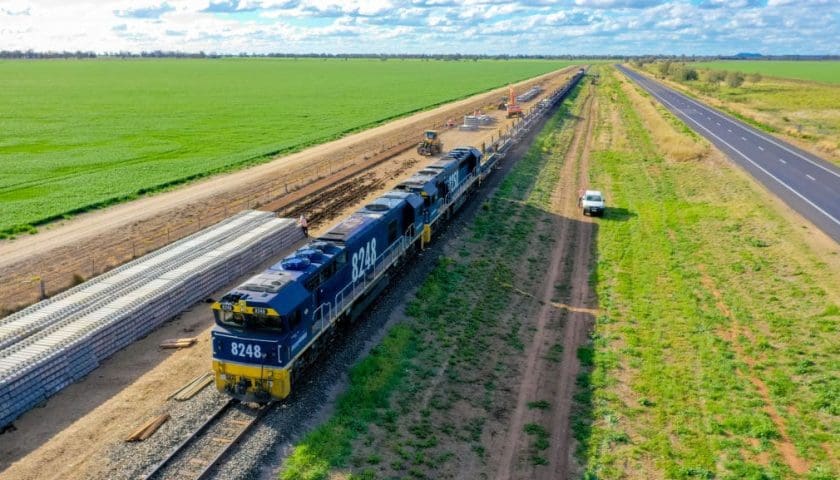
AUSTRALIA – A new inland rail solution has been introduced in Australia to support container movement from port terminals to inland depots. The service connects Sydney terminals to Minto and Melbourne terminals to Ettamogah, Griffith, and Bomen.
For fresh produce exporters and food logistics investors, this rail network reduces reliance on road transport, mitigates port congestion, and ensures perishable goods reach inland markets with fewer delays.
How the Inland Rail Network Works
The service links maritime ports to inland destinations, supporting cargo flows between coastal and inland regions. Thus, customers can route containers directly to inland depots for collection and distribution.
Rail transport is used to move containers over longer distances, reducing reliance on trucking for final delivery. Containers can be collected directly from inland depots, and equipment returns are handled through a single de-hire location that covers multiple container types.
On the other hand, rail transfers help reduce delays caused by port congestion, enabling cargo to reach inland depots for onward distribution. Booking is handled through a single process, using predefined port-of-discharge and place-of-delivery options. The provider manages the end-to-end transport process from port to inland destination.
Benefits for Fresh Produce Supply Chains
Current routes include Sydney to Minto and Melbourne to Ettamogah, Griffith, and Bomen. Griffith is a major hub for Australian horticulture, including citrus, grapes, and stone fruit.
Therefore, direct rail connectivity from Melbourne port to Griffith enables fresh produce to move from farm to ship with fewer truck transfers, reducing handling points and preserving cold chain integrity.
The system is designed to simplify coordination by reducing the need to work with multiple transport providers. For logistics managers, this unified booking process and single de-hire location streamline operations, reducing administrative time and lowering the risk of miscommunication.
Logistics Outlook
The inland network integrates maritime and rail transport, supporting container movement from port arrival to delivery points in the inland.
For logistics operators sourcing Australian produce, this rail expansion promises more predictable transit times and reduced spoilage risk.
Reduced dependence on road transport lowers fuel costs and carbon emissions while improving supply chain reliability through simplified coordination and fewer transfer points.
Sign up HERE to receive our email newsletters with the latest news and insights from Africa and around the world, and follow us on our WhatsApp channel for updates.