FAO finds widespread fish fraud across US$195 billion global seafood trade
Health, biodiversity and market risks identified
WORLD – A new report from the Food and Agriculture Organization of the United Nations says fraudulent practices are embedded across the global seafood supply chain, affecting a sector valued at US$195 billion and exposing weaknesses that threaten consumers, fish stocks and fair competition.
The study, prepared by FAO’s Fisheries and Aquaculture Division together with the Joint FAO/IAEA Centre of Nuclear Techniques in Food and Agriculture, reviews how deception occurs from harvest to retail and outlines scientific methods that authorities can use to identify and deter misconduct.
Although no comprehensive global estimate exists, the report cites research indicating that roughly 20% of seafood traded internationally may be linked to some form of fraud, a higher share than recorded for meat, fruit or vegetables, and defines the practice as an intentional act designed to mislead buyers.
Fraud across the chain
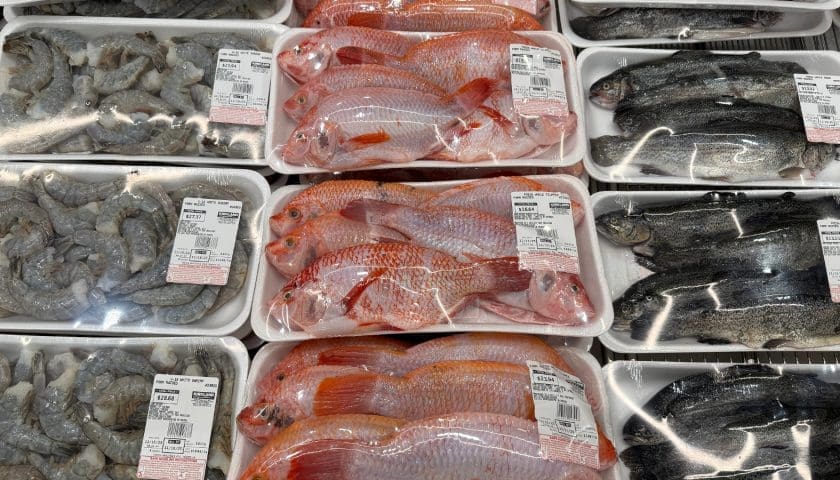
The document describes a range of tactics, from treating tuna with additives to enhance colour and selling starch-based products as imitation shrimp, to packaging processed fish such as surimi so it resembles crab meat, alongside species substitution where lower value fish such as tilapia are marketed as red snapper and labels misstate origin, expiry dates or sustainability credentials.
It also details diversion of products into markets for which they were not intended, overfishing concealed through false documentation, water addition to increase weight, and relabelling of farmed fish as wild caught to secure higher prices, with one example showing that passing off farmed Atlantic salmon as wild Pacific salmon can add nearly US$10 per kilogram.
Available studies point to consistent mislabelling in restaurants and retail outlets, with some surveys suggesting up to 30% of seafood sold in restaurants is incorrectly identified and US research indicating that about one third of tested products do not match their labels even though less than 1% of imports are inspected.
Detection and enforcement
Because more than 12,000 aquatic species are traded and definitions vary between jurisdictions, the report states that establishing a global baseline has proven difficult, yet it highlights tools such as enzyme-linked immunosorbent assays, stable isotope analysis, nuclear magnetic resonance and portable X-ray fluorescence devices that can help verify species and origin.
Fatty acid profiling can differentiate wild from farmed fish while carbon and nitrogen isotope ratios assist in tracing geographic source, and a DNA barcoding survey in Los Angeles found lower mislabelling rates at processing plants than at retailers and sushi restaurants, where substitution of red snapper and halibut was frequent.
FAO calls for harmonised labelling that includes scientific species names, improved traceability systems and stronger enforcement supported by industry participation, while work continues with the Codex Alimentarius Commission to develop international standards and expand laboratory capacity through technical assistance programmes.
Sign up HERE to receive our email newsletters with the latest news and insights from Africa and around the world, and follow us on our WhatsApp channel for updates.