

Nigerian consumer group flags unfair competition in cocoa imports
CCC-AI calls for stricter regulation as Nigeria’s cocoa exports surge despite concerns over imported cocoa-based products.
NIGERIA – The Centre for Consumer Concern, Awareness and Initiative (CCC-AI), a Lagos-based consumer advocacy group, has raised concerns over what it describes as unfair competition in the importation of cocoa-based products into Nigeria, calling on authorities to strengthen regulatory enforcement to ensure a level playing field.
In a statement, the group alleged that regulatory exemptions granted to importers of cocoa-based and dairy products undermine local manufacturers. According to CCC-AI, the exemption of such imports from pre-shipment Standards Organisation of Nigeria Conformity Assessment Programme (SONCAP) certification creates market distortions.
The group stated that “weak enforcement of regulatory guidelines has created a regulatory gap that allows non-compliant cocoa-based products to access the Nigerian market,” placing domestic producers at a disadvantage.
CCC-AI also linked its concerns to a recent global recall involving contaminated batches of SMA infant formula. It said the issue highlights broader weaknesses in Nigeria’s consumer protection framework.
“CCC-AI notes that although details around the infant milk issue continue to unfold, both matters reveal a deepening crisis in Nigeria’s consumer protection and regulatory enforcement landscape, particularly around imported food and cocoa-based products,” the statement said.
“These are not isolated incidents,” the group added. “They point to a pattern where regulatory vigilance is weakening, corporate compliance is inconsistent, and consumers are being placed at unacceptable risk.”
The advocacy group urged the Federal Competition and Consumer Protection Commission (FCCPC) to lead coordinated action across regulatory agencies.
It called for the establishment of a joint task force involving the Lagos State Consumer Protection Agency (LASCOPA), National Agency for Food and Drug Administration and Control (NAFDAC), Standards Organisation of Nigeria (SON), Nigeria Customs Service, and consumer groups.
CCC-AI also appealed directly to industry players, urging “brands and importers to take responsibility and prioritize Nigerian consumer safety.” It stressed that “Nigerian consumers deserve safe products, fair markets, and regulators who act decisively in the public interest.”
Cocoa exports surge
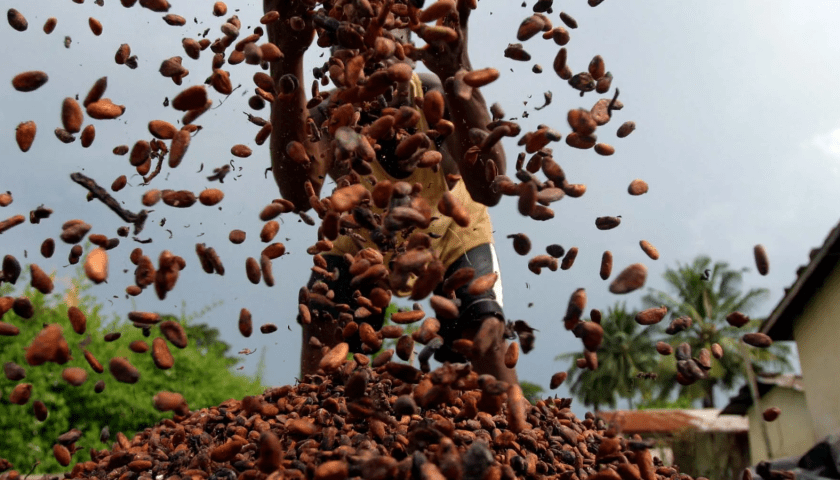
The call for tighter oversight comes as Nigeria’s cocoa export earnings surged despite softer global prices. Data from the National Bureau of Statistics (NBS) show that cocoa exports generated N3.63 trillion (US$2.4bn) between June 2024 and June 2025, driven by demand from countries including the Netherlands, Belgium, Spain and Germany.
According to the NBS, Nigeria exported N1.32 trillion (US$880m) worth of raw cocoa beans in the first quarter of 2025, followed by N485.5 billion (US$324m) in the second quarter. In 2024, cocoa exports were valued at N624.71 billion (US$416m) in Q3 and N1.2 trillion (US$800m) in Q4.
The bureau noted that cocoa exports in Q1 2025 were more than 200% higher than the N421.78 billion (US$281m) recorded in the same period of 2024.
It added that superior quality cocoa was among Nigeria’s top agricultural exports in Q2 2025, valued at N277 billion (US$185m), with standard quality beans accounting for N208.5 billion (US$139m).
Sign up HERE to receive our email newsletters with the latest news and insights from Africa and around the world, and follow us on our WhatsApp channel for updates.