KEBS secures four landmark accreditations, reinforces quality leadership in Kenya
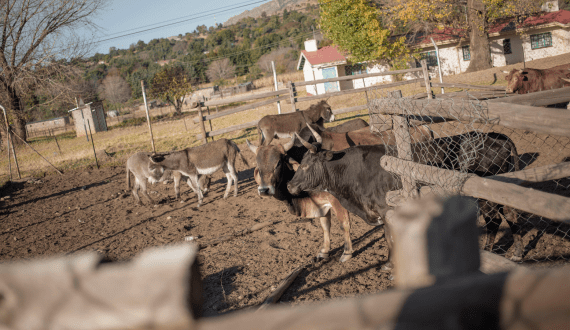
Putting quality assurance into practice, KEBS’ Market Surveillance team recently seized uncertified food products that lacked the mandatory Standardization Mark.
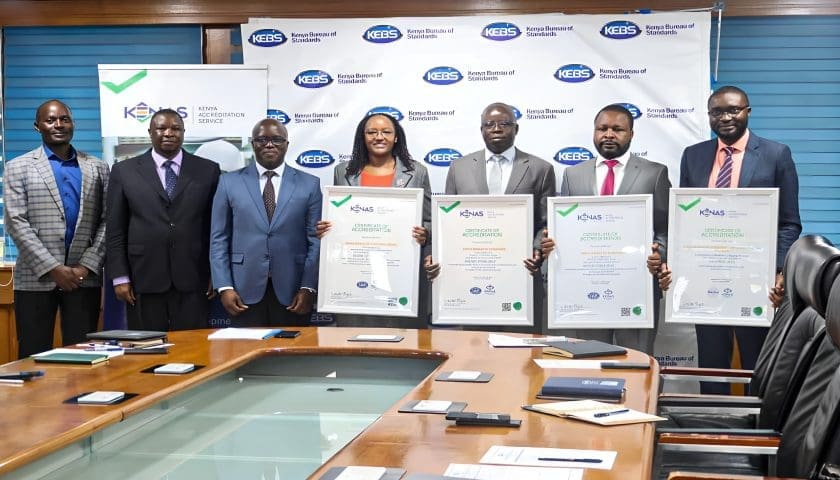
KENYA – The Kenya Bureau of Standards (KEBS) has secured four major accreditations from the Kenya Accreditation Service (KENAS), signalling a new era of credibility, competence, and global alignment in conformity assessment.
This recognition marks a pivotal chapter in KEBS’ mission to uphold excellence in product quality, safety, and sustainability, both at home and across Africa.
Among the accreditations, KEBS’ Product Certification Scheme was endorsed under ISO/IEC 17065:2012, a globally respected standard that validates its technical capability and impartiality in certifying products, processes, and services.
This step not only enhances consumer confidence but also supports African Continental Free Trade Area (AfCFTA) objectives by fostering the cross-border acceptance of products that meet harmonized standards.
KENAS praised this achievement as a significant boost to intra-African trade and consumer protection, positioning KEBS as a trusted certification body on the continent.
Additionally, KEBS received accreditation for its African Conformity Assessment Program (ACAP), a sustainability-focused certification initiative grounded in ARS/AES 01:2014—an African standard emphasizing agriculture sustainability and eco-labelling.
This milestone directly roots sustainability in Kenya’s agricultural value chains, offering a verifiable pathway for green growth and market competitiveness.
To further strengthen testing integrity, KEBS was accredited as a Proficiency Testing Provider under ISO/IEC 17043, which ensures that both national and regional laboratories deliver accurate, reliable, and harmonized results.
This reinforces the integrity of Kenya’s testing infrastructure and supports quality assurance across sectors.
The fourth accreditation involves an expansion of KEBS’ System Certification scope to include ISO/IEC 27001:2022, a crucial addition in an age defined by information vulnerability and the need for robust data protection systems.
Together, these recognitions enhance Kenya’s visibility in global markets, improve market access, build confidence in data security and quality systems, strengthen testing and certification infrastructure, and facilitate the development of more sustainable and transparent supply chains.
KEBS emphasizes that these are not just certificates. “At KEBS, we do not see these as mere certificates. They are trust in action. They are Kenya’s promise to the world that quality is not optional, it’s guaranteed,” stated Esther Ngari, Managing Director of KEBS. “To our partners, stakeholders, and the global standards community, we are ready to collaborate, innovate, and lead.”
Safeguarding consumers through market surveillance and enforcement
Reinforcing these standards in practice, KEBS’ Market Surveillance team recently conducted enforcement operations in Karen, Ngong town, and Kiserian in Kajiado County.
The team seized uncertified roasted nuts, dog food, brown sugar, and various animal feeds that lacked the mandatory Standardization Mark (SM), highlighting potential health risks to consumers.
This proactive market intervention underscores KEBS’ vigilance in ensuring only certified and safe products circulate in the Kenyan market. Consumers are encouraged to verify authenticity by checking for the SM and texting the code to 20023 or reporting violations via the toll-free number 1545.
With these accreditations and enforcement actions, KEBS continues to demonstrate its commitment to safeguarding quality, supporting regional trade, and fostering sustainable economic development through trusted certification systems.
Sign up HERE to receive our email newsletters with the latest news and insights from Africa and around the world, and follow us on our WhatsApp channel for updates.