Oman-Sharjah logistics corridor removes transit tariffs, speeds cargo via Khatmat Malaha crossing
By simplifying customs procedures and reducing operational costs, the project enhances the overall competitiveness of the local supply chain.
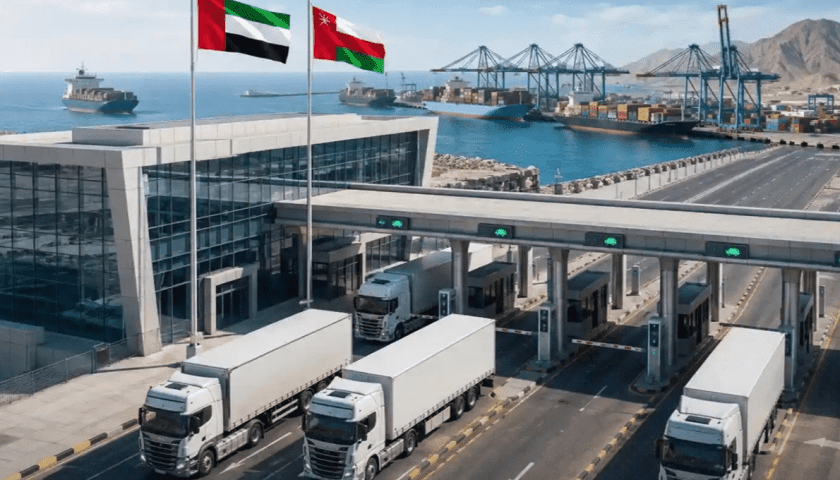
OMAN – Trucks travelling from Oman to the UAE via Sharjah’s transit gateways are now exempt from transit tariff fees under the newly activated Logistics Corridor initiative between Oman and the UAE.
The initiative aims to streamline the movement of goods by reducing operational costs, accelerating customs and transit procedures, and enhancing supply chain efficiency across ports and border crossings.
Direct Land-Sea Integration
According to details announced by the participating authorities, the corridor links Oman’s ports and industrial zones with Sharjah’s ports and land transit network via the Khatmat Malaha border crossing.
The route enables faster cargo movement to Sharjah Port, which lies less than 70 kilometres from the border. Officials said the new corridor has created direct land-sea logistics integration between the two countries, supporting exporters, transport operators, and logistics firms by streamlining procedures and reducing transport costs.
For fresh produce exporters and logistics operators, the removal of transit tariff fees lowers landed costs for perishable shipments between Oman and the UAE. Additionally, the short 70-kilometre distance from Khatmat Malaha to Sharjah Port minimizes transit time, preserving the cold chain for temperature-sensitive cargo.
Operational Advantages and Border Efficiency
Authorities highlighted several operational advantages, including integrated land-and-sea connectivity, faster processing at ports and checkpoints, reduced truck transit times, and improved efficiency in commercial transport operations.
The Khatmat Malaha crossing has been identified as a strategic logistics gateway linking Oman’s road network and industrial hubs with Sharjah’s maritime infrastructure, while Sohar Port continues to play a key role in supporting import-export activity and supply chain integration.
The project is being implemented in cooperation with the Sharjah Roads and Transport Authority, the Sharjah Ports, Customs and Free Zones Authority, and the UAE’s Federal Authority for Identity, Citizenship, Customs and Port Security.
Regional Trade Competitiveness
The corridor is expected to enhance the competitiveness of regional trade, reduce waiting times at border crossings, and expedite clearance for trucks and cargo.
By simplifying customs procedures and reducing operational costs, the project enhances the overall competitiveness of the local supply chain.
This strategic partnership aims to streamline commerce and deepen economic integration between Oman and the UAE.
As both nations continue to align their trade frameworks, this corridor sets a precedent for reduced barriers, faster transit, and more efficient land-sea connectivity across the Gulf region.
Sign up HERE to receive our email newsletters with the latest news and insights from Africa and around the world, and follow us on our WhatsApp channel for updates.