
Qatar’s logistics sector drives economic diversification with US$2.05B market
Qatar has also launched a US$1 billion investment incentives programme, offering support covering up to 40% of investment costs in strategic sectors, including logistics.
QATAR – Qatar’s logistics and free zones sector continues to strengthen its position as a key pillar of the country’s economic diversification strategy, supported by world-class infrastructure, strategic investment incentives, and an expanding logistics market valued at more than QR7.5 billion (approx. US$2.05 billion).
According to a report aired by Qatar TV, the country has invested billions of riyals in developing an integrated logistics ecosystem that includes Hamad Port, Hamad International Airport, modern road networks, and specialized logistics zones.
These investments have enhanced Qatar’s role as a regional hub for global trade, supply chains, and investment while supporting the objectives of Qatar National Vision 2030.
Strategic Vision and Geographic Advantage
The report noted that Qatar’s strategic geographic location allows businesses to reach nearly 60% of the world’s population within an eight-hour flight and access markets comprising more than two billion consumers within a 3,000-kilometre radius.
Centred around the strategic Hamad Port and Hamad International Airport, the nation offers businesses unparalleled access to billions of consumers across the Middle East, Africa, and Europe.
Investment Incentives and Industrial Competitiveness
To further strengthen the sector’s competitiveness, the relevant authorities introduced significant investment incentives in 2025 by reducing annual land rental fees in selected industrial and logistics zones by up to 50%.
Qatar has also launched a US$1 billion investment incentives programme, offering support covering up to 40% of investment costs in strategic sectors, including logistics.
Expert Insights and Infrastructure Integration
Industrial affairs expert Dr. Khalid Al Buainain highlighted the fundamental role of logistics in supporting every productive sector of the economy.
He explained that logistics costs can, in many cases, exceed manufacturing costs. As a result, effective logistics systems are critical to ensuring the economic viability of industrial projects.
Dr. Al Buainain also emphasized the importance of Hamad Port and Hamad International Airport in enhancing Qatar’s logistics competitiveness.
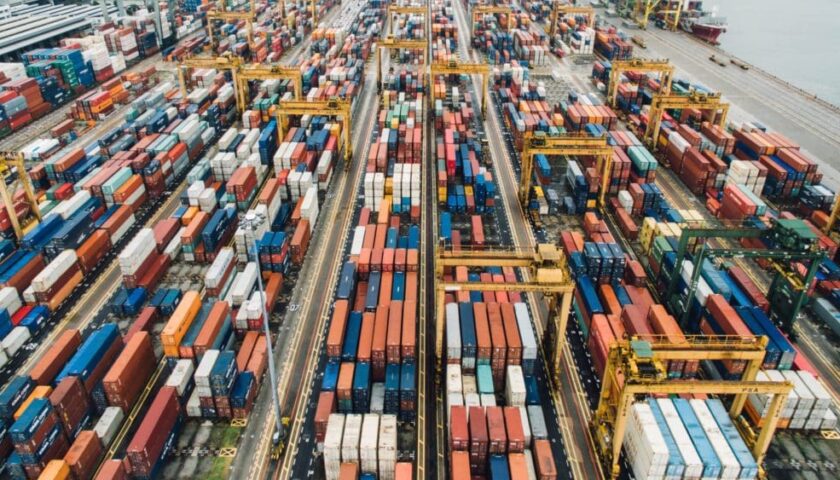
For instance, Hamad Port can handle more than 7 million containers annually and can accommodate the world’s largest cargo vessels, while Hamad International Airport was built to serve more than 50 million passengers and handle significant air cargo volumes.
He added that the seamless integration between the port and the airport enables efficient multimodal transportation. This connectivity strengthens Qatar’s appeal as a regional distribution and re-export hub.
Ultimately, these advancements align with the Qatar National Vision 2030 by establishing a sustainable, export-oriented economy, while keeping the country prepared to pursue further infrastructure developments to sustain long-term growth in the logistics and free zones sector.
Sign up HERE to receive our email newsletters with the latest news and insights from Africa and around the world, and follow us on our WhatsApp channel for updates