

Indonesia steps up cocoa production revival to reduce imports, boost processing capacity
Indonesia is accelerating cocoa sector reforms through replanting and productivity initiatives to reduce import dependence and strengthen domestic cocoa processing.
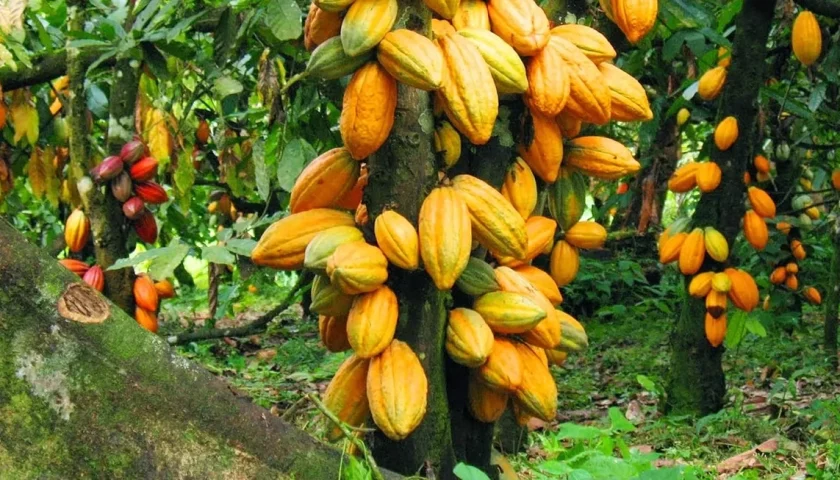
INDONESIA – Indonesia is intensifying efforts to revive its cocoa industry after years of declining production left processors increasingly dependent on imported beans, as the government introduces new measures to restore domestic output and improve farm productivity.
According to Bloomberg, the country, once the world’s third-largest cocoa producer, is seeking to reverse years of underinvestment, ageing cocoa trees and pest infestations that have significantly reduced harvests.
Although Indonesia’s 11 cocoa processing facilities have the capacity to grind more than 750,000 tonnes of cocoa beans annually, they are currently operating at only about 60% capacity because of insufficient domestic supplies, according to the Ministry of Industry.
To address the shortfall, the government has introduced a cocoa export levy that will finance replanting programmes, the distribution of high-quality seedlings and initiatives aimed at improving productivity. The approach follows a similar model previously adopted to support the development of Indonesia’s palm oil sector.
Government officials and industry leaders have also emphasised that improving yields on existing cocoa farms should take precedence over expanding plantation acreage.
The reforms come as Indonesia faces greater exposure to volatility in global cocoa markets. Cocoa prices reached record highs in 2024 following severe supply shortages but have since retreated significantly.
Bloomberg Intelligence forecasts that the global cocoa market could return to a deficit during the 2026/27 season if demand strengthens and El Niño affects production in West Africa.
Over the past decade, Indonesia’s cocoa production has declined by approximately 5% annually, while cocoa bean imports have increased by about 50%, according to ministry data. Most cocoa is produced by smallholder farmers in Sulawesi, where ageing trees, disease pressure and limited investment have reduced yields.
During the same period, cocoa cultivation area has contracted from more than 1.7 million hectares to approximately 1.37 million hectares as farmers shifted to crops such as rice and oil palm.
“Today the biggest challenge for the processing industry is the shortage of raw materials,” said Soetanto Abdoellah, chairman of the Indonesian Cocoa Board.
Industry efforts have already shown some progress. According to International Cocoa Organization data, cocoa bean production increased to approximately 200,000 tonnes during the 2024/25 season, compared with around 160,000 tonnes two years earlier.
However, Soetanto noted that production remains far below processing capacity, adding that “about 200,000 to 300,000 hectares of ageing cocoa trees still need replacing,” while another one million hectares could achieve significantly higher yields through improved farm management.
Cargill’s Director of Cocoa Trading and Risk Management for Southeast Asia, Australia and New Zealand, Fiona Hor, said Indonesia should prioritise higher-value cocoa products rather than raw bean exports.
“Indonesia should not focus on exporting local beans, but Indonesia should focus on exporting more value products all across the world,” she said.
Sign up HERE to receive our email newsletters with the latest news and insights from Africa and around the world, and follow us on our WhatsApp channel for updates.