Egypt’s logistics market projected at US$14.7B by 2031 with 5.04% CAGR
Transportation services generated US$9.4 billion in foreign currency receipts during FY2024/2025, highlighting the sector’s contribution to foreign currency resources.
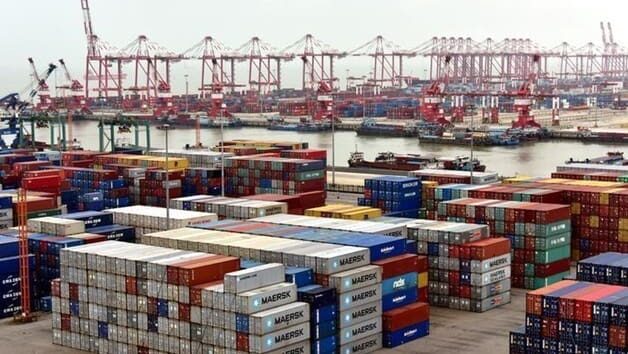
EGYPT – Egypt’s freight and logistics market is projected to grow from US$10.93 billion in 2025 to US$14.66 billion by 2031, recording a compound annual growth rate (CAGR) of 5.04% between 2026 and 2031, according to a report by the Information and Decision Support Centre (IDSC).
The Cabinet-affiliated center released the report titled “Green Logistics: Towards a Sustainable Supply Chain Model“, outlining the sector’s contribution to Egypt’s economy and the country’s transition towards more sustainable supply chains.
The transport and storage sector contributed an average of 5% to Egypt’s gross domestic product (GDP) between fiscal years 2015/2016 and 2024/2025, with its GDP value trending upwards despite fluctuations in annual growth.
Infrastructure Investment and Port Development
Egypt has 14 operating ports undergoing development and five new facilities under construction at Abu Qir, Al-Max, Gargoub, Berenice, and Taba.
Several Egyptian ports have advanced in international rankings, with East Port Said Port ranking third globally and first regionally in the World Bank and S&P Global Market Intelligence’s 2024 Container Port Performance Index (CPPI).
For instance, Damietta Port was listed among the top 20 container terminals in the 2024 CPPI and ranked tenth globally for annual improvement.
On the other hand, Ain Sokhna Port secured a Guinness World Record for the deepest artificial port basin created on land at 19 meters, while Abu Qir Port is seeking recognition for what would be the Mediterranean’s deepest port at 22 meters.
Green Logistics and Digital Transformation
The government is prioritizing a shift toward green logistics, utilizing electric vehicles and energy-efficient warehousing to reduce the industry’s environmental footprint.
Digitalization efforts include the National Single Window for Foreign Trade Facilitation (NAFEZA) and warehouse management systems (WMS), which help accelerate customs clearance, reduce cargo dwell times, and lower logistics costs.
Employment and Economic Impact
Transportation and warehousing accounted for 8.7% of Egypt’s workforce in the first quarter of 2026, representing an estimated 2.9 million workers out of a total labour force of 33.3 million.
Additionally, transportation services generated US$9.4 billion in foreign currency receipts during FY2024/2025, highlighting the sector’s contribution to foreign currency resources.
Meanwhile, by service type, freight transportation held the largest share of the Egyptian logistics market at 59.73% in 2025.
Ultimately, Egypt aims to transform its traditional transit points into smart, sustainable logistics hubs that anchor global supply chains.
Sign up HERE to receive our email newsletters with the latest news and insights from Africa and around the world, and follow us on our WhatsApp channel for updates.