Arua youth poultry farmers cut costs by US$6,425 through collective action
The program also provided start-up grants, enabling members to turn the knowledge gained through training into practical investments.
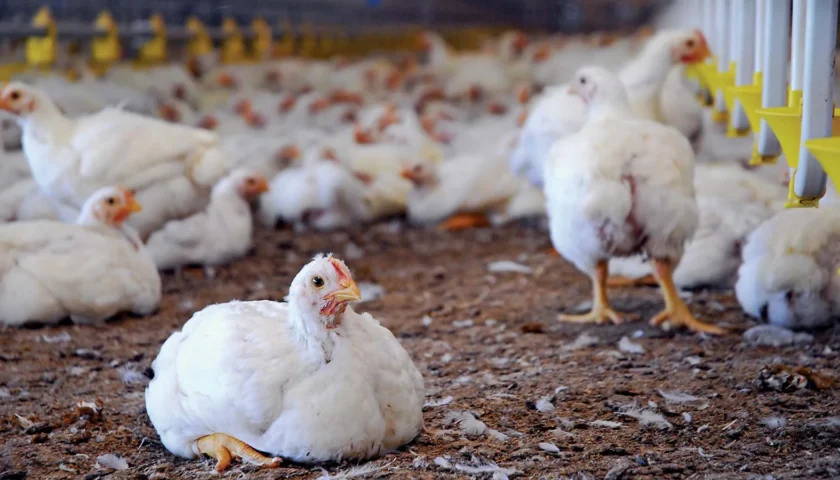
UGANDA – Young poultry farmers in northern Uganda have cut costs by an estimated UGX25.2 million (approx. US$6,425.49) through collective action, pooling knowledge, markets and resources to overcome challenges that often constrain small-scale agribusinesses, according to a Cordaid report.
The Arua City Youth Poultry Farmers Association has brought together young entrepreneurs who share skills and resources to improve poultry production, access markets, and invest in businesses.
Founded in 2025, the association now has 62 members, including 39 men and 23 women, with 20 from the refugee community in Arua City.
“We support each other to meet customer demand and link one another to new business opportunities,” Kevin Akech, chair of the association, told Cordaid.
The young farmers initially faced challenges, including weak record-keeping, limited market access, and gaps in poultry management, particularly in disease prevention and flock health.
While many were already engaged in poultry farming, they needed stronger business systems and technical skills to shift from survival-oriented production to more sustainable enterprises.
According to Cordaid, the farmers participating in the WeWork – Green & Decent Jobs for Youth Project received training in financial management, market research, digital marketing, and poultry production.
The program also provided start-up grants, enabling members to turn the knowledge gained through training into practical investments.
Meanwhile, one of the association’s major investments has been a 500-egg incubator powered by both solar energy and electricity. Previously, farmers depended on external suppliers for day-old chicks, with deliveries sometimes taking two to three weeks.
However, Cordaid reports that producing chicks through its own incubator has helped the group save an estimated UGX25.2 million (approx. US$6,425.49), which it can redirect into flock expansion, feed, vaccination, and market supply.
“Our orders for day-old chicks could take two to three weeks to arrive. Having our own incubator has helped us close that gap and ensure that our farms are not disrupted by supply delays,” Damian said.
The farmers are also exploring duck farming, brooding services, and converting poultry waste into organic inputs for horticultural production.
Lastly, the WeWork – Green & Decent Jobs for Youth Project in West Nile is funded by the European Union and the Government of Belgium and implemented by Cordaid, Caritas Arua Diocese, and Enabel.
Sign up HERE to receive our email newsletters with the latest news and insights from Africa and around the world, and follow us on our WhatsApp channel for updates.