

Assam government releases US$7.3M tea industry incentives amid export concerns
Incentive aims to boost orthodox tea production and support the industry as export uncertainties emerge in key Gulf markets.
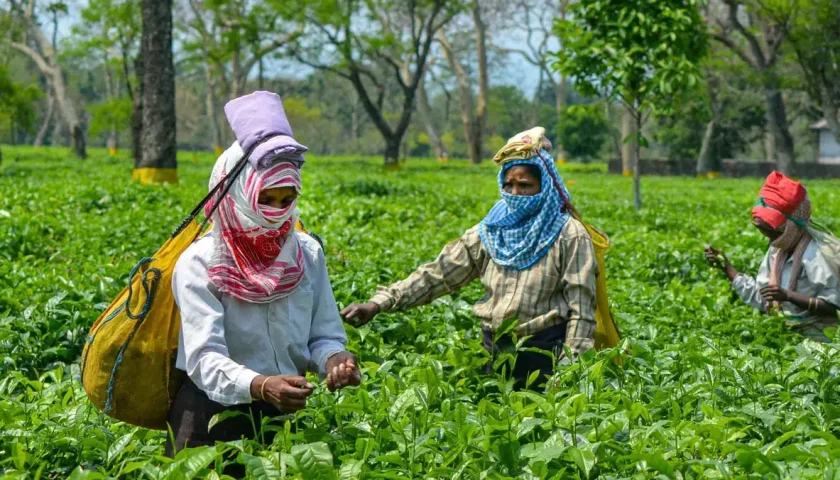
INDIA – The government of Assam has released Rs 94.70 crore under the Assam Tea Industries Special Incentive Scheme to support tea gardens and strengthen the tea industry amid export disruptions affecting global markets.
The ceremonial distribution of benefits under the scheme was held on Monday, where officials confirmed that a total of 486 tea gardens received financial support during the current financial year.
According to the state government, the disbursement is intended to help stabilise the sector while promoting the production of orthodox and specialty tea varieties, which are increasingly important for export markets.
The Assam Tea Industries Special Incentive Scheme includes four major components designed to strengthen the financial position of tea producers.
These include a three percent annual interest subvention on working capital loans, a subsidy of Rs 10 per kilogram for orthodox or specialty tea production, and a subsidy covering 25 percent of the cost of plant and machinery for orthodox and specialty tea units.
The scheme also provides an agricultural income tax holiday for tea producers until the 2026–27 financial year.
Officials noted that the incentives are designed to encourage long-term investment in higher-value tea varieties while ensuring greater financial stability for tea gardens.
Tea has remained central to the economic and cultural identity of Assam for nearly two centuries. However, industry leaders have recently warned that geopolitical developments could disrupt tea exports, particularly shipments passing through the Strait of Hormuz.
Shailja Mehta, President of the Tea Association of India, said the situation could affect exports to key Gulf markets.
“The prospect of Indian tea exports does look grim as of now,” Mehta said, referring to tensions in the region that could disrupt shipping routes.
She explained that the Strait of Hormuz has historically served as a critical passage for Indian exports, particularly for tea shipments to markets in the Persian Gulf.
According to the Tea Association of India, countries including Iran, Iraq and the United Arab Emirates accounted for a significant portion of India’s tea exports.
“Therefore, if one were to look at the total tea export figures of 280 million kilograms attained during 2025, almost 41 percent of teas exported by India pass through the Strait of Hormuz,” Mehta said.
She also noted that the Assam government’s recent decision to increase the orthodox tea subsidy from Rs 10 per kilogram to Rs 15 per kilogram could face challenges if regional tensions continue.
Meanwhile, Himanta Biswa Sarma, Chief Minister of Assam, said tea exports from the state had grown significantly.
“As per the statistics available with us, while the production of the Assam tea has registered an increase of 40 million kilograms, the production of the South Indian tea has decreased in the current fiscal,” Sarma said.
Sign up HERE to receive our email newsletters with the latest news and insights from Africa and around the world, and follow us on our WhatsApp channel for updates.