Burkina Faso expands floating cage fish farming to reduce reliance on imports
Floating cage farming tested at multiple dam sites to exploit untapped potential.
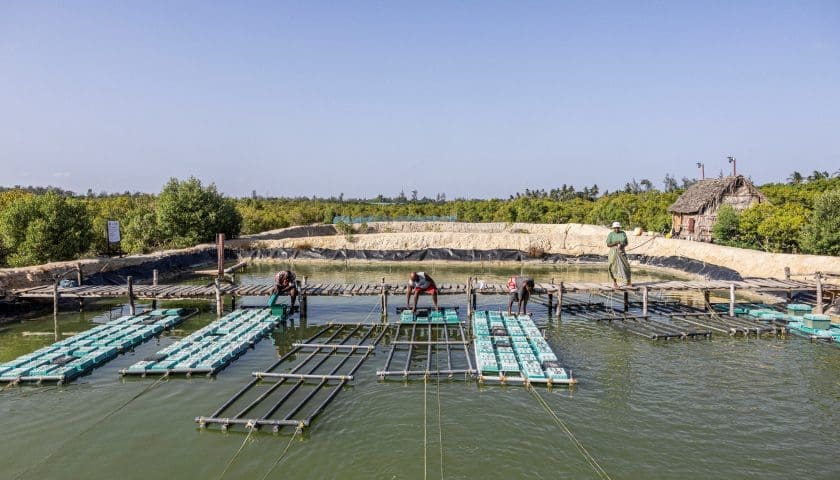
BURKINA FASO – Burkina Faso’s Minister of Agriculture Ismael Sombié inaugurated a floating cage fish farming project at the Yakouta Dam in Dori, located in the northeastern Liptako region.
The project introduces a modern aquaculture method in which fish are raised in cages submerged in reservoirs, with 22 cages initially stocked with more than 150,000 fingerlings.
Officials plan to expand the Dori site to 50 cages, which could generate up to 200 tons of fish per year upon full operation.
Floating cage farming was first trialed in Burkina Faso at the Samandéni Dam in the Hauts-Bassins region in April 2024, under the Agro-Pastoral and Fisheries Offensive, with 180 cages installed.
Authorities had projected that private investment could help Samandéni achieve annual production of 54,000 tons of fish.
Following that initiative, a project named “Dumu Ka Fa,” supported by the food sovereignty fund, began at the Bagré Dam, involving 44 private investors and a potential yield of 1,500 tons annually.
Despite these efforts, aquaculture currently accounts for only a small fraction of local fish production, with FAO data showing 1,127 tons produced through farming out of 31,406 tons of total catches in 2023.
The country’s apparent fish consumption reached 241,441 tons in the same year, indicating a supply gap of over 200,000 tons, which was met through imports.
Statistics from the National Institute of Statistics and Demography indicate Burkina Faso imported an average of 165,141 tons of fish per year between 2020 and 2024, costing roughly 19.3 billion CFA francs (US$34.7 million) annually.
The government has identified aquaculture as a strategy to address this deficit, estimating the country has a theoretical production potential of 110,000 tons per year, of which less than 1% is currently utilized.
To encourage investment, the 2025 supplementary budget law includes a value-added tax exemption on fish feed, which represents about 80% of production costs in African aquaculture.
The World Economic Forum reported on January 19 that difficulties in accessing feed push production costs on the continent 10-20% higher than global averages.
Sign up HERE to receive our email newsletters with the latest news and insights from Africa and around the world, and follow us on our WhatsApp channel for updates.