

Carlsberg exits Tibet Brewing joint venture after 20 years
Carlsberg agrees to sell its Tibet joint venture stake, ending a long-running partnership dispute while reaffirming its commitment to China.
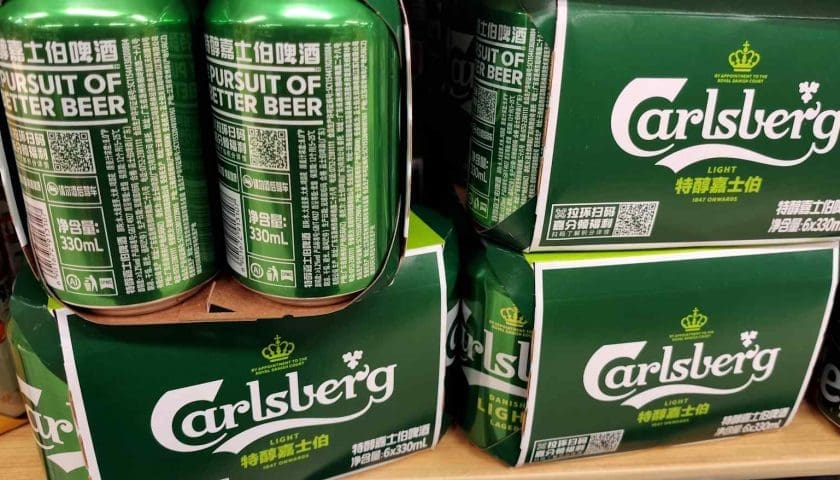
CHINA – Carlsberg has agreed to divest its 50% stake in Tibet Lhasa Brewery after two decades, ending a long-running brewing joint venture marked by repeated disputes and operational challenges with its Chinese partner.
Tibet Development, Carlsberg’s long-standing partner, said its board has approved the purchase of the Danish brewer’s 50% equity interest in the joint venture for 292 million yuan (US$42 million), to be paid in cash.
The transaction will give Tibet Development full ownership of the brewery.
According to a filing by Tibet Development to the Shenzhen Stock Exchange, the total equity value of Tibet Lhasa Brewery is estimated at 1.196 billion yuan (US$171.7 million).
The company said the consideration for Carlsberg’s stake was determined “through mutual negotiations,” despite being significantly lower than half of the estimated equity valuation.
In addition to the sale proceeds, Carlsberg will receive a final dividend payment of 60 million yuan (US$8.6 million), from the joint venture.
In its stock exchange filing, Tibet Development said the transaction would “improve the integrity of the listed company’s assets” and “enhance” its “management and control over Lhasa Beer.”
The company added that full ownership would “improve decision-making efficiency, optimise the overall business layout, consolidate and enhance market position, and meet the company’s strategic development needs.”
Carlsberg did not publicly disclose its reasons for exiting the joint venture. However, Kenni Leth, head of group external communications at Carlsberg, confirmed the transaction in an email.
“Carlsberg has signed final agreements to sell our 50% non-controlling equity stake in Lhasa Brewery to our joint venture partner, Tibet Development,” Leth said.
“The transaction is subject to certain corporate and regulatory approvals that must be obtained by Tibet Development, and once obtained, Carlsberg will pursue deal completion.”
The brewer has previously acknowledged challenges at the Tibet operation. In its 2021 annual report, Carlsberg said that “disputes relating to the management of Tibet Lhasa Brewery resulted in significant disturbances to the operation of the company, which negatively impacted financial performance.”
Carlsberg added that the disputes caused the group to lose “significant influence” over the joint venture, leading it to reclassify its 50% holding from an associate to a financial investment.
This resulted in an impairment loss of DKK244 million (US$39 million) at current exchange rates. A further write-down of DKK66 million (US$10.6 million), was recorded in 2024.
Despite the Tibet divestment, Carlsberg said it remains committed to China, which is its largest market globally. The brewer reported revenue of DKK12.88 billion in China in 2024 (US$2.06 billion), accounting for 17% of total group revenue.
“We have not changed our view on China,” Carlsberg CEO Jacob Aarup-Andersen said in the company’s latest annual report. “We remain committed to this market, where we continue to see attractive long-term volume and value growth opportunities.”
Sign up HERE to receive our email newsletters with the latest news and insights from Africa and around the world, and follow us on our WhatsApp channel for updates.

