
Carrefour Spain formalizes sustainable fishing agreement with its suppliers
Agreement comes as Spain shows the economic weight of its blue economy sector.
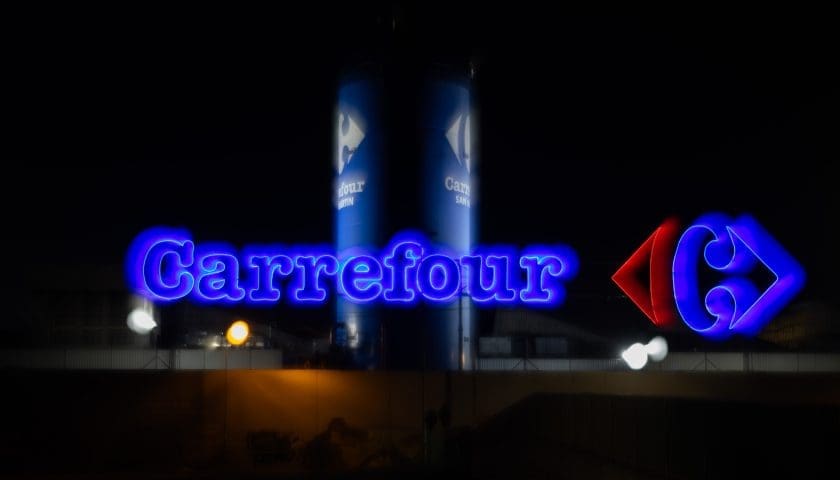
SPAIN – Carrefour Spain has entered into a sustainable fishing agreement with its suppliers during an industry event in Madrid focused on fisheries, aquaculture, and the blue economy, according to information released after the meeting.
The agreement was signed at the event titled Fishing and Aquaculture in Spain: Blue Economy from Sea to Table, held under the framework of the Spanish Network of Knowledge Spaces for the Blue Economy (REECEA).
The meeting was jointly organized by the General Secretariat for Fisheries and Carrefour Spain, bringing together public officials, retailers, and sector representatives to discuss trade practices and consumer access to fishery and aquaculture products.
The initiative centers on aligning supply chain practices with sustainability criteria in fishing and aquaculture, while also addressing market standards linked to sourcing, processing, and retail distribution.
Minister of Agriculture, Fisheries, and Food Luis Planas closed the event, referring to the role of distribution companies in shaping production methods, product quality, and competitive conditions across the sector.
During his remarks, Planas said fisheries and aquaculture should be explicitly included in the planned European Oceans Pact, which is intended to outline a unified approach to maritime policy across the European Union.
Official figures presented at the event show that Spain employs nearly one million people in blue economy activities, making it the largest employer in this sector in the EU.
The same data indicate that Spain ranks second in the bloc in blue economy gross value added, generating more than US$39.6 billion (€36 billion).
Investment and policy framework
The ministry also highlighted funding under the Agri-food Strategic Project for Economic Recovery and Transformation, through which 19 fishery and aquaculture processing companies have received a combined US$44 million (€40 million).
Separate allocations under Spain’s Recovery, Transformation and Resilience Plan have directed an additional US$2.2 million (€2 million) toward projects connected to the blue economy.
Officials described the blue bioeconomy as an approach that leverages marine and aquatic biological resources for food, energy, materials, and services while protecting ecosystems.
Planas also referred to Spain’s National Food Strategy, which includes measures to inform consumers about dietary patterns that incorporate fish and other aquatic products.
The agreement signed by Carrefour Spain forms part of a broader policy and commercial context in which public institutions and retailers are increasingly coordinating on sustainability standards within the seafood supply chain.
Sign up HERE to receive our email newsletters with the latest news and insights from Africa and around the world, and follow us on our WhatsApp channel for updates.