
GigaFarm in Dubai builds world’s first circular vertical farming system, first harvest due this year
The circular model addresses two problems simultaneously: food waste and import dependence.
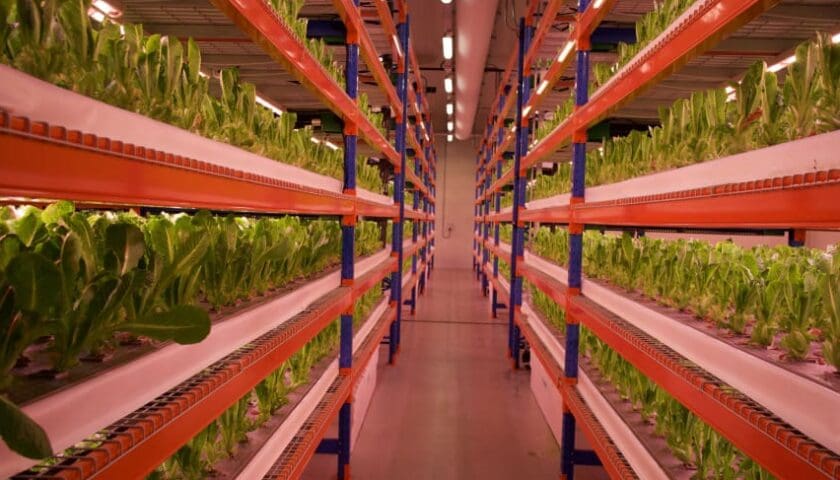
UAE – Construction of the world’s first circular GigaFarm is well underway in Dubai’s Food Tech Valley, with the first phase set to bring 20 vertical farming Growth Towers online this summer and first crops available to residents later this year.
The GigaFarm transforms food waste into economic opportunities by integrating waste-to-value and regenerative farming technologies in a closed-loop ecosystem.
The facility will divert more than 50,000 tonnes of food waste from landfill annually, converting it into valuable nutritional resources and producing over 3 million kilograms of food.
The engineering behind the closed-loop ecosystem and the Growth Towers integrates multiple complementary technologies across a 900,000-square-foot site. First, the IGS provides cutting-edge controlled-environment technology that enables sustainable crop production even in climate-challenged regions.
Second, the 200 Growth Towers are designed to maximize resource efficiency and prevent waste from going to landfill.
Andrew Lloyd, CEO of IGS, said technology is a key enabler for demonstrating that sustainable crop production is possible even in some of the world’s most climate-challenged regions. With British engineering, the system is scalable, resource-efficient, and strengthens long-term food security for the UAE.
Additionally, Oliver Christof, CEO of ReFarm, described GigaFarm as the world’s first fully integrated regenerative food ecosystem, which brings together food production, resource recovery, water sovereignty, artificial intelligence, and circularity in one location.
“What begins in Dubai will serve as a blueprint for the future of food production worldwide,” Christof added. The site demonstrates how future cities can produce food locally while reducing waste, conserving resources, and regenerating the environment.
For MEA fresh produce stakeholders, GigaFarm marks a fundamental shift from traditional agriculture to infrastructure-based food production. The facility will replace 1% of the UAE’s fresh produce imports, a significant achievement for a desert nation heavily reliant on foreign food supplies.
The circular model addresses two problems simultaneously: food waste and import dependence. By turning waste streams into growing inputs, the GigaFarm eliminates the linear take-make-dispose model that dominates conventional agriculture.
The first harvest later this year is highly anticipated, and its success may inspire similar projects from Saudi Arabia to South Africa.
More importantly, the GigaFarm is not just a Dubai project. It is a global proof of concept, and its results will shape agricultural investment decisions for years to come.
Sign up HERE to receive our email newsletters with the latest news and insights from Africa and around the world, and follow us on our WhatsApp channel for updates.