India plans aquaculture expansion in northern states
Government eyes saline-affected land for fish farming projects worth over US$4.3 million
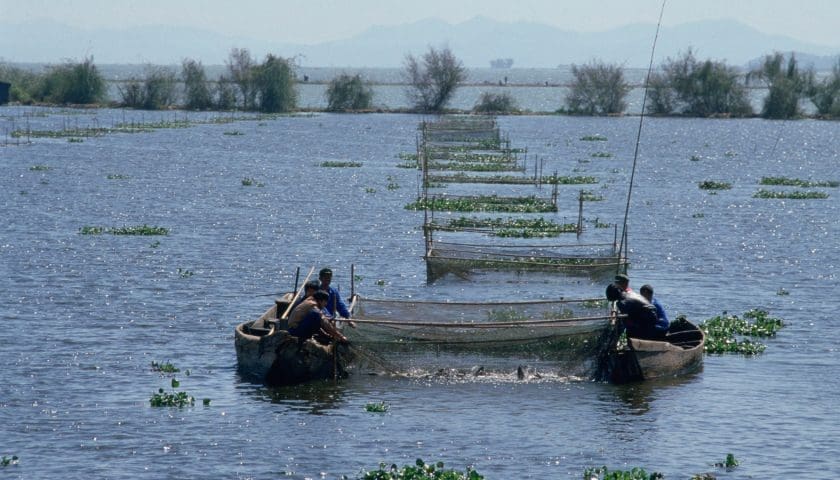
INDIA – India is moving to expand saline water aquaculture in northern states such as Punjab, Haryana, Uttar Pradesh, and Rajasthan as part of efforts to convert salt-affected farmland into productive fish farming areas.
According to the Department of Fisheries, saline intrusion in these regions has created an opportunity to use previously unproductive land for aquaculture.
For the 2025 financial year, the department has approved projects covering more than 263 hectares, surpassing its initial goal of 200 hectares, with an investment exceeding US$4.3 million.
Two aquaculture clusters are planned for Muktsar Sahib in Punjab and Sirsa in Haryana, where the government hopes to create localised production hubs.
The initiative aligns with the broader Pradhan Mantri Matsya Sampada Yojana (PMMSY), under which Punjab has already attracted fishery investments amounting to about US$22.4 million.
Fish production in Punjab reached 0.18 million tonnes in 2023–24, and official figures indicate that improved aquaculture methods have added roughly US$60 million to farmers’ earnings in the past five years.
During a recent visit to Punjab, Abhilaksh Likhi, secretary of the Department of Fisheries, emphasised the importance of adopting technology-based farming systems, diversifying species, and equipping farmers with modern aquaculture skills to sustain rural livelihoods.
Between 2013–14 and 2024–25, India’s inland fish production increased by more than 140 percent, from 6.1 million tonnes to 14.73 million tonnes.
Overall national fish output for FY25 stood at 19.5 million tonnes, more than double what the country produced in FY14.
Poultry industry shifts focus inward
Meanwhile, India’s poultry sector is increasingly prioritising local consumption as high input costs and limited export capacity make international trade less profitable.
Despite being the second-largest egg producer globally, India ranks only around 25th in egg exports, according to Tarun Sridhar, former secretary at the Ministry of Animal Husbandry, Dairying and Poultry.
Speaking ahead of the 17th Poultry India Expo set for November 25–28 in Hyderabad, Sridhar questioned the rationale for pursuing exports when local markets remain lucrative, noting that producers often earn higher margins domestically.
India is also among the top five global meat producers, but its per capita meat consumption averages just 3 kilograms per year, a figure lower than in Bangladesh.
Naveen Pasuparthy, president of the Karnataka Poultry Farmers and Breeders Association, said the average Indian consumes about 6 to 7 kilograms of chicken and roughly 103 eggs annually.
He estimated that around 71 percent of the population eats chicken and eggs, suggesting that with 1.43 billion people, the domestic market alone holds substantial room for growth.
“If there’s already such a large market here, why look outside?” he said.
Sign up HERE to receive our email newsletters with the latest news and insights from Africa and around the world, and follow us on our WhatsApp channel for updates.