
Liberia, EU sign US$29.7M deal for artisanal fishing support
Project focuses on infrastructure, food security, and income stability from 2026 to 2032
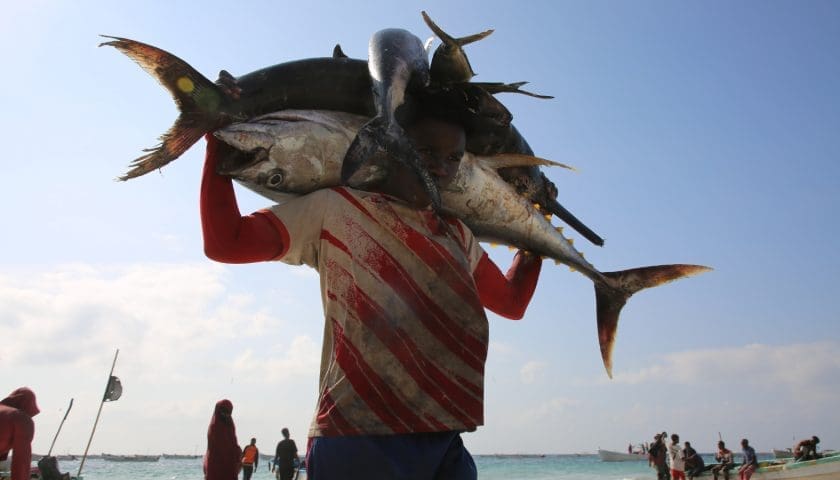
LIBERIA – Liberia and the European Union have entered into a financing agreement valued at US$29.7 million to support the country’s artisanal fishing sector, with the deal formalized in January 2026, according to Liberia’s Ministry of Finance and Development Planning.
The funding is intended to strengthen fishing-related livelihoods in all nine coastal counties by improving facilities used by small-scale fishers and traders, at a time when fishing remains central to employment, nutrition, and household income in coastal areas.
Under the agreement, resources will be directed toward cold storage installations, ice production equipment, and upgraded fish handling sites, with the aim of reducing spoilage and improving market access for fish products handled by artisanal operators.
Government officials said the planned investments are expected to raise household incomes and improve food availability, as post-harvest losses continue to limit earnings for fishing families despite steady demand for fish nationwide.
Fishing accounts for an estimated 10 percent of Liberia’s gross domestic product and provides employment to more than 33,000 people, according to data from the Fisheries Committee for the West Central Gulf of Guinea, placing the sector among the country’s most economically significant activities.
Despite its importance, the industry faces persistent pressure from coastal erosion, loss of mangrove ecosystems, land tenure disputes, and weak enforcement capacity, which together have complicated efforts to manage marine resources sustainably.
Although Liberia has enacted the Fisheries and Aquaculture Management and Development Act to regulate the sector, authorities continue to struggle with limited funding, insufficient monitoring tools, and ongoing illegal, unreported, and unregulated fishing activity.
The European Union has also pointed to broader structural challenges, citing climate-related environmental damage, rising food insecurity, limited fiscal capacity, and underdeveloped infrastructure as factors that heighten the country’s vulnerability.
Previous Fisheries Support Initiatives
The EU-backed project follows earlier interventions, including a program supported by the Government of Japan, the Food and Agriculture Organization of the United Nations, and the National Fisheries and Aquaculture Authority, which delivered a fish processing plant and safety equipment to women fishmongers in Grand Bassa County in September 2025.
That initiative introduced improved fish smoking technology, solar-powered freezers, safety gear, and navigation tools, while training more than 120 fish processors as instructors, reaching an estimated 1,800 beneficiaries nationwide and addressing long-standing health, safety, and preservation challenges in Liberia’s fisheries sector.
Sign up HERE to receive our email newsletters with the latest news and insights from Africa and around the world, and follow us on our WhatsApp channel for updates.