Libya inaugurates automated poultry slaughterhouse in Al-Bayda
Facility processes up to 2,000 chickens per hour
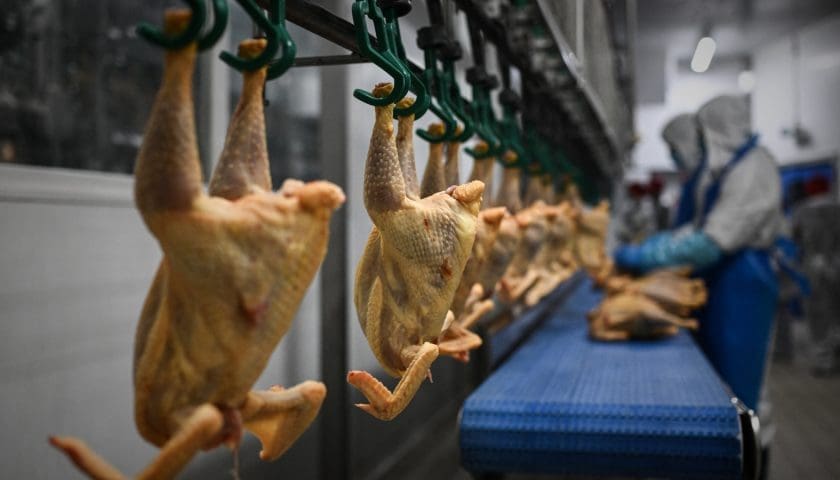
LIBYA – The first fully automated and integrated poultry slaughterhouse in Al-Bayda, located in Libya’s Jabal al-Akhdar region, has officially opened, according to local authorities.
The facility was inaugurated by Professor Saleh Boumbarka, Director of Animal Resources for Al-Bayda municipality in the Green Mountain area, who said the project forms part of ongoing efforts to upgrade livestock infrastructure.
He said the installation represents a shift toward modern production systems that align with international health and safety requirements while addressing gaps in local processing capacity.
The slaughterhouse is designed to handle up to 2,000 chickens per hour, a throughput expected to help meet rising domestic demand for poultry products.
Authorities indicated that the plant will operate under strict veterinary and health oversight, with monitoring applied at every stage from intake to final processing.
Boumbarka stated that the use of automated systems reduces direct human handling, which is intended to lower contamination risks and improve overall food safety outcomes.
Technical personnel from the animal resources department are assigned to supervise operations, including verifying product weight and ensuring compliance with health standards before distribution.
The project is also expected to influence pricing dynamics by improving processing efficiency and reducing operational costs across the poultry value chain.
Officials say the introduction of such facilities could help improve market supply consistency, particularly in a sector that has experienced fluctuations in recent years.
Market context
Libya remains a significant consumer of poultry, with chicken forming a staple protein source, although domestic production continues to face structural constraints.
The country relies heavily on imports to meet demand, with poultry imports reaching US$219 million in 2024, including US$193 million sourced from Brazil.
Local production is largely dependent on imported inputs, such as feed, vaccines, and breeding stock, which increase costs and limit self-sufficiency.
Production systems in regions such as Al-Jabal Al-Akhdar are typically intensive, with farmers adopting short broiler cycles of 32-41 days to maximise output.
This reliance on high-turnover production reflects efforts to maintain supply despite input challenges, while facilities like the new slaughterhouse are expected to improve downstream processing efficiency.
Sign up HERE to receive our email newsletters with the latest news and insights from Africa and around the world, and follow us on our WhatsApp channel for updates.