
Namibia records strong poultry growth with 14.4 million chickens slaughtered by September 2025
Local production rises as imports decline and regional exports expand
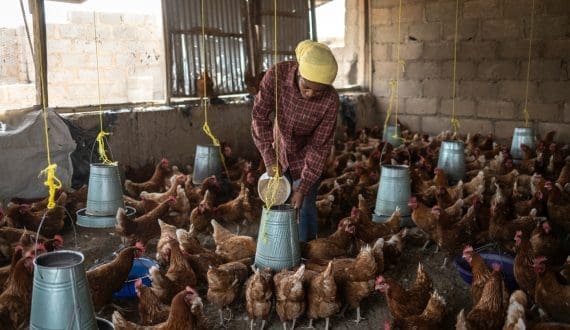
NAMIBIA – Namibia’s poultry industry has continued to post strong growth in 2025, with the Livestock and Livestock Products Board of Namibia (LLPBN) reporting that 14.4 million chickens were slaughtered locally by the end of September.
The growth reflects the country’s ongoing efforts to strengthen domestic food production and lessen reliance on imported poultry.
Poultry farming has shifted from small-scale backyard setups to organized commercial operations, creating jobs and income in key producing regions such as Erongo, Khomas, and Otjozondjupa.
LLPBN data shows that local chicken output has been increasing steadily, supported by consumer demand for fresh, locally sourced meat.
Export Expansion within SADC
Between January and September, Namibia exported 893,782 kilograms of processed chicken products valued at about US$2.2 million, signaling a stronger regional trade footprint.
Zambia accounted for 59.2 percent of Namibia’s poultry exports, followed by Botswana at 15.2 percent, South Africa at 13.1 percent, and Zimbabwe at 12.4 percent.
The data indicates a growing recognition of Namibian chicken products in neighboring markets within the Southern African Development Community (SADC).
Imports Still Fill Local Supply Gap
Despite progress on production, Namibia continues to import poultry to meet total demand, with about 15.9 million kilograms brought in by September, mostly from South Africa.
This continued dependence on imports highlights the need to strengthen local capacity in feed manufacturing, hatcheries, and meat processing.
However, there are signs of improvement, as imports of day-old chicks from South Africa dropped by 79.4 percent, from 62,150 in August to 12,800 in September.
Industry experts attribute this sharp decline to better performance by local hatcheries, which are increasingly supplying domestic producers.
They also link the sector’s resilience to targeted government programs, private investment in agribusiness, and ongoing farmer training that improves productivity and management practices.
Meanwhile, other livestock segments are showing mixed performance, with the sheep industry recording weaker results in the same period.
Only 30,242 sheep were marketed in September, a 31.3 percent decrease from the previous year, largely due to drought, lower demand, and unstable market prices.
While challenges persist, poultry production has emerged as one of Namibia’s most stable agricultural activities.
Sign up HERE to receive our email newsletters with the latest news and insights from Africa and around the world, and follow us on our WhatsApp channel for updates.