

Philippines expands agricultural ties with Egypt, Laos to boost fruit exports
These diplomatic efforts aim to secure new market opportunities and bolster food security through cross-border cooperation.
PHILIPPINES – The Philippine government is expanding its international agricultural footprint through strategic partnerships with Egypt and Laos to export tropical fruits and secure essential fertilizer supplies for local farmers.
Egypt has expressed interest in importing Philippine papaya and pineapple, with the Department of Agriculture also promoting bananas, mangoes, coconuts, durian, pomelo, and dragon fruit to the Egyptian market.
Agriculture Secretary Francisco Tiu Laurel Jr. said, “We see significant potential to expand agricultural cooperation with Egypt, not only in securing reliable fertilizer supplies for our farmers but also in creating new market opportunities for Philippine agricultural exports.”
The Philippine government is pursuing approvals to supply fresh bananas and mangoes to Egypt, while negotiations on a pending Specific Commodity Understanding continue. These fruits are key export commodities for the Philippines, with established production systems that meet international quality standards.
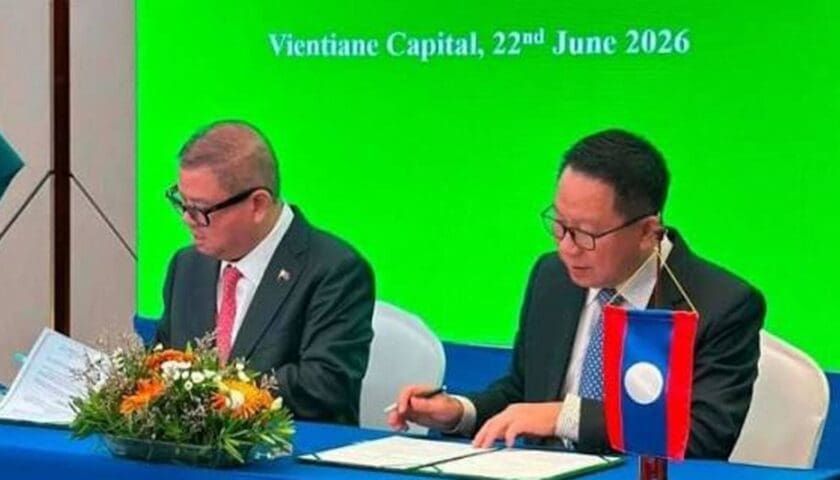
In a separate development, the Department of Agriculture and Laos’ Minister of Agriculture and Environment signed an updated memorandum of understanding during Tiu Laurel’s visit to Vientiane, modernizing a bilateral framework first established in 1998.
The new pact expands cooperation to include strategic crops, climate-resilient farming, agricultural technology, research, postharvest systems, and sanitary and phytosanitary standards. This modernized agreement replaces outdated frameworks with a comprehensive approach to contemporary agricultural challenges.
Furthermore, Manila and Vientiane identified trade opportunities in coconut products, a sector in which the Philippines has significant production capacity and export potential. The two countries agreed to establish a joint agriculture committee to oversee technical exchanges, capacity-building programmes, and joint research under the agreement.
These diplomatic efforts aim to secure new market opportunities and bolster food security through cross-border cooperation. The partnership with Laos focuses on advancing technical research and improving postharvest systems for crops such as coconuts, while the Egyptian agreement addresses both export expansion and fertilizer import security.
Securing fertilizer supplies from Egypt addresses a critical input cost for Philippine farmers, potentially reducing production costs and improving farm profitability. Meanwhile, gaining access to Egyptian markets for tropical fruits opens new revenue streams for Philippine agricultural exporters.
The updated agreement with Laos positions both nations to address the impacts of climate change on farming and to improve postharvest systems to reduce losses and enhance product quality.
In the end, these bilateral efforts demonstrate the Philippines’ commitment to international agricultural cooperation and sustainable development in the sector.
Sign up HERE to receive our email newsletters with the latest news and insights from Africa and around the world, and follow us on our WhatsApp channel for updates.