

South Africa’s cherry sector grows with new varieties and global demand
Farmers in the Western Cape are increasing cherry production, with new cultivars and smart growing systems leading to stronger export prospects.
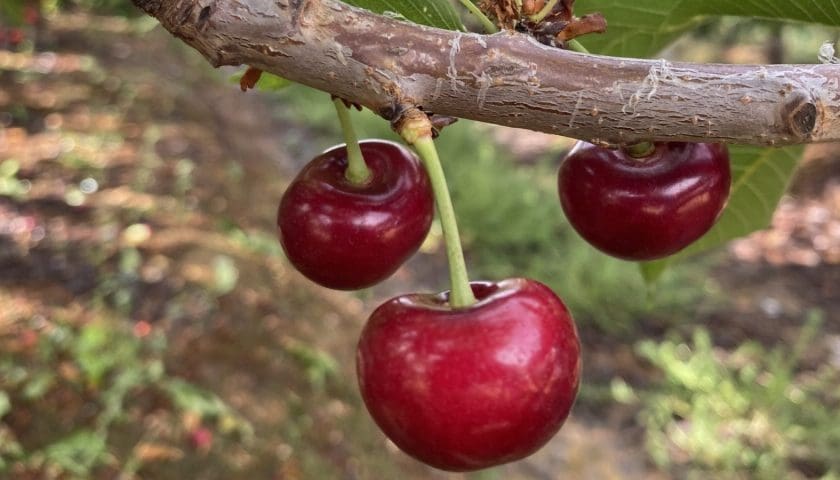
SOUTH AFRICA – South Africa’s cherry industry is maturing quickly, with growers focusing on new cultivars and improved orchard systems to boost both quality and yields.
Though still a smaller player globally, the country is starting to make its mark in export markets, particularly in Europe and the Middle East.
The Koue Bokkeveld region near Ceres continues to be a stronghold for cherry farming due to its cool climate and reliable chilling hours.
During a recent visit by the International Fruit Tree Association, Dutoit Agri showcased its fourth-leaf orchard, which includes Lapins and Royal Helen cultivars. These varieties are known for their firmness, a quality vital for long shipping durations.
“Fruit firmness is critical if we want to reach distant markets like Europe and the Middle East,” said Piet Bosman, technical advisor at Dutoit Agri. “We’ve made mistakes before by overloading trees and compromising quality, but now we’re focused on balance.”
The orchard follows a central leader training system known as “tabletop,” using MaxMa 16 rootstock planted at a density of 1,667 trees per hectare.
The system supports freestanding tiers of branches, strengthened by crossarms that help maintain structure and allow easier harvesting. Bosman noted that late cultivars can yield up to 18 metric tons per hectare once fully mature.
Production director Gys du Toit explained that this method simplifies branch renewal and increases labor efficiency. “The layout makes it easier for workers to harvest from platforms or even the ground,” he said. “It also helps us manage fruiting branches and keep the trees productive.”
Greg Lang from Michigan State University added, “The system brings consistency to branch renewal and improves light distribution, which in turn supports better yield outcomes.”
While the country’s cherry footprint remains smaller than that of Chile, acreage has more than doubled in recent years. Over 30 growers now farm more than 700 hectares across South Africa, with over a million trees planted.
Exports account for about half of the 2,600 metric tons currently produced, and demand continues to rise, especially in Malaysia, Vietnam, and Hong Kong.
Despite not having a formal industry body like Hortgro overseeing cherries, growers are cooperating through research initiatives. Much of the focus lies in testing new varieties, especially those suited for low- to medium-chill conditions.
Dutoit has placed particular attention on cultivars from Zaiger Genetics’ Royal series, which show promise for wider adaptability across the country’s varied climates.
On the pricing front, things are also looking up. Average prices have risen by R10 to R20 (US$0.52 to US$1.04) per kilogram compared to the previous season. Around 55 percent of South Africa’s cherries are sold locally, with Johannesburg and Durban being the biggest markets.
As more growers adopt modern systems and expand into promising varieties, South Africa is steadily building its place in the global cherry trade.
Sign up HERE to receive our email newsletters with the latest news and insights from Africa and around the world, and follow us on our WhatsApp channel for updates.