Tiger Brands unveils updated corporate identity
The South African food giant refreshes its logo and corporate purpose after 25 years
SOUTH AFRICA – Tiger Brands has updated its corporate brand 25 years after changing its name from Tiger Oats.
The company has revised its corporate purpose to “cultivate and nourish lives, every day and every tomorrow,” emphasizing its ongoing role in creating positive outcomes along its value chain.
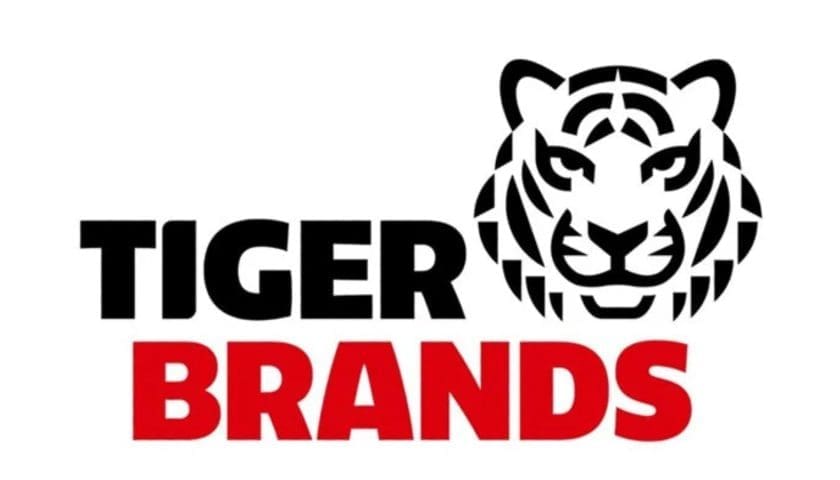
The redesigned logo keeps the iconic tiger emblem but adopts a modern, geometric style with abstract shapes inspired by the company’s production and distribution processes, while retaining the traditional red and black colour scheme.
Werna Oberholzer, director of corporate affairs and sustainability, said the logo symbolizes unity and progress, representing both the company’s legacy and its forward-looking vision.
Tiger Brands collaborated with Design Bridge and Partners to refresh the corporate identity, taking into account employee insights and the company’s cultural significance in the region.
The updated strategy highlights the organisation’s goal to make food and daily essentials affordable and accessible, spanning agriculture, logistics, and household products.
Mathew Weiss, managing director of Design Bridge and Partners, noted that the new visual style draws on bold, authentic branding to create a design employees can support while pursuing the company’s purpose.
The corporate purpose now incorporates the term “cultivate” to signify active contributions to sustainable outcomes and “every tomorrow” to highlight long-term commitment.
The brand refresh coincides with Tiger Brands’ improved financial performance, demonstrating progress in its turnaround plan.
For the year ended September 30, the company reported a 31 percent increase in full-year earnings, with headline earnings per share from continuing operations reaching 21.41 rand (US$1.25) compared with 16.31 rand (US$0.95) previously.
Group revenue rose 2.7 percent to 34.4 billion rand (US$2.01 billion), reflecting a 3.5 percent increase in sales volumes despite limited household spending power.
CEO Tjaart Kruger observed that while food and non-alcoholic beverage inflation eased to 4.5 percent, rising costs of other essentials continued to influence consumer purchasing decisions.
Second-half volumes increased 5.7 percent, with Milling and Baking revenue up 5.3 percent, supported by higher volumes and reduced wheat prices.
Operating income climbed 35 percent to 3.8 billion rand (US$222 million) due to top-line growth and efficiency improvements, pushing the operating margin to 11.1 percent, above management expectations.
Tiger Brands declared a special final dividend of 27.10 rand (US$1.58) per share, rising sharply from 6.84 rand (US$0.40) in the previous year, reflecting improved cash flow.
On the international front, the company is advancing its exit from Cameroon by selling its 74.69 percent stake in Chocolaterie Confiserie Camerounaise to Minkama Capital for approximately US$76 million, subject to regulatory approval.
Sign up HERE to receive our email newsletters with the latest news and insights from Africa and around the world, and follow us on our WhatsApp channel for updates.