

Trump administration pushes for faster meat processing
New USDA policy allows pork and poultry plants to operate at higher speeds.
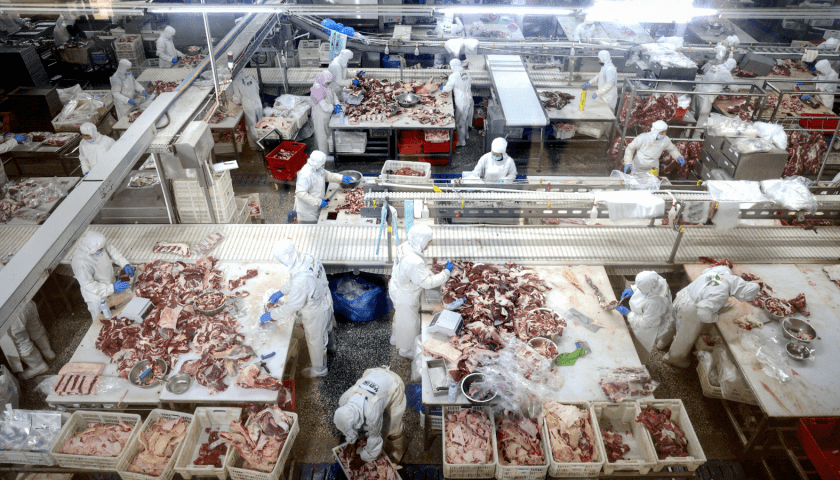
USA – The Trump administration has instructed the US Food Safety and Inspection Service (FSIS) to accelerate pork and poultry processing by eliminating what it calls outdated administrative requirements.
According to the US Department of Agriculture (USDA), these regulations have slowed production and increased costs for meat processors.
The directive, announced by US Secretary of Agriculture Brooke Rollins, aims to ease restrictions on the pork and poultry industries while maintaining food safety standards.
Under the policy, FSIS will extend waivers that permit processing plants to operate at higher line speeds.
The USDA argues that this move will help meet market demand without excessive government interference.
A formal ruling on the policy is expected soon, with the USDA stating that the reforms will strengthen the country’s food production system, lower costs for producers, and create a more stable supply chain.
Industry Reactions and Economic Implications
The National Pork Producers Council (NPPC) has backed the USDA’s decision, particularly its plan to make the New Swine Inspection System (NSIS) permanent. NPPC President Duane Stateler said the changes will provide financial stability to pork producers, noting that without this program, some farmers could have faced additional losses of nearly US$10 per pig.
FSIS first approved increased line speeds at six pork plants in November 2021 as part of a study evaluating the impact on worker safety.
The program was extended in December 2023 for 90 days and again in February 2024, allowing it to continue through January 15, 2025.
In January, FSIS released findings from its study, concluding that faster line speeds were not the primary cause of musculoskeletal disorders (MSDs) among workers.
As a result, plants will no longer be required to submit worker safety data.
Worker Safety Concerns Persist
Despite these findings, concerns over worker safety remain.
Data from the US Department of Labor, published in October 2024, showed that meat and poultry workers suffer serious injuries at twice the rate of other industries.
The Bureau of Labor Statistics reported that in 2022, the rate of occupational illnesses in the animal slaughtering and processing sector was six times higher than the national average for all industries.
While the USDA insists the changes will boost efficiency without compromising worker safety, labor advocates warn that increasing line speeds could place additional strain on employees in an already high-risk industry.
Sign up HERE to receive our email newsletters with the latest news and insights from Africa and around the world, and follow us on our WhatsApp channel for updates.

