

Uganda targets 3,500 Tonnes of annual coffee exports to South Korea
Besmark Coffee and GVCC have signed an exclusive supply and distribution agreement as Uganda seeks to expand coffee exports and strengthen its presence in Asian markets.
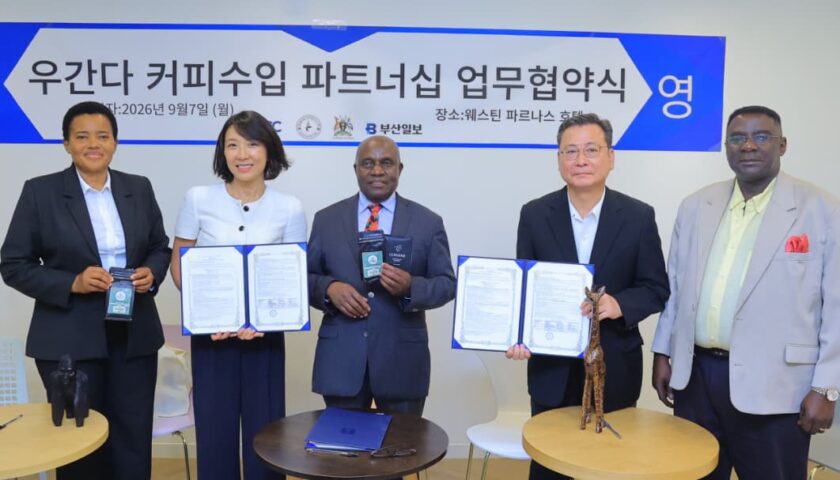
UGANDA – Uganda is targeting annual coffee exports of about 3,500 tonnes to South Korea under a new distribution agreement between Besmark Coffee Company Ltd and Busan-based GVCC Co. Ltd, as the country seeks to expand its presence in Asian markets.
Under the agreement signed on Monday, Besmark will serve as Uganda’s exclusive coffee supplier, while GVCC will become the exclusive distributor in South Korea. A first consignment of two containers is already being shipped to the market.
GVCC Chief Executive Soo-jung Lim developed an interest in Ugandan coffee after initial discussions with Uganda’s delegation at a coffee exhibition in Busan. Lim said GVCC was ready to do business with Uganda.
Uganda’s Ambassador to Japan, Tophace Kaahwa, said Lim was targeting imports of one 20-tonne container of Ugandan coffee each day, equivalent to about 3,500 tonnes annually.
Ugandan official Kiyonga said the country wanted to increase domestic value addition rather than continue shipping raw beans. “Uganda wanted, in time, to add value to its coffee at home rather than ship raw beans,” Kiyonga said.
He said Uganda was also seeking to expand into Japan and other Asian markets, with government support for the partnership. Kiyonga added that President Yoweri Museveni had set a target of producing 20 million bags of coffee annually.
The agreement comes as Uganda’s coffee exports reach record levels. In the 12 months to May 2026, the country exported 8.6 million 60kg bags worth about $2.3 billion, up from 7.4 million bags a year earlier, according to the Ministry of Agriculture, Animal Industry and Fisheries.
Uganda overtook Ethiopia as Africa’s largest coffee exporter in 2025 and remains among the world’s leading Robusta suppliers. Robusta accounts for about 80% of Uganda’s coffee exports, while Arabica represents a smaller share but is growing faster in value.
Asia accounted for only 13% of Uganda’s coffee exports in the 2024/25 coffee year, compared with about 62% for Europe and 23% for Africa. The South Korean agreement therefore provides an opportunity to increase Uganda’s share of the Asian market.
Kiyonga said the partnership could also help address Uganda’s trade imbalance with South Korea. Uganda exported about US$10 million of goods to South Korea while importing about US$100 million, he said. Official data put Uganda’s total exports to South Korea at about US$7.18 million in 2023, with coffee, tea and spices accounting for about US$2.6 million.
“We want to balance the trade,” Kiyonga said. The partnership will strengthen Uganda’s access to South Korean coffee buyers.
Sign up HERE to receive our email newsletters with the latest news and insights from Africa and around the world, and follow us on our WhatsApp channel for updates.

