USDA FSIS withdraws framework for Salmonella control in raw poultry products
The proposed framework, published on August 7, 2024, was targeted at reducing Salmonella illnesses associated with poultry products.
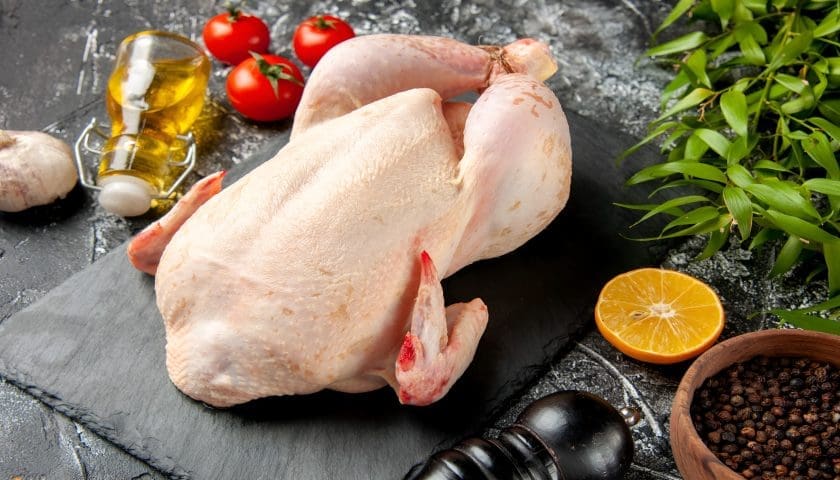
USA – The U.S. Department of Agriculture’s Food Safety and Inspection Service (USDA-FSIS) is withdrawing the proposed rule and proposed determination titled “Salmonella Framework for Raw Poultry Products,” as of 25 April 2025.
According to the FSIS, the withdrawal is meant to allow the Agency to further assess its approach for addressing Salmonella illnesses associated with poultry products.
The proposed framework, published on August 7, 2024, was targeted at reducing Salmonella illnesses associated with poultry products.
The proposal announced FSIS’ determination that raw chicken carcasses, chicken parts, comminuted chicken, and comminuted turkey products contaminated with certain Salmonella levels and serotypes are adulterated as defined in the Poultry Products Inspection Act (PPIA).
Before January 17, 2025, when the comment period for the proposed framework ended, the USDA FSIS received 7,089 comments.
Among them, the most expresed issues included those associated with FSIS’ legal authority to propose the final product standards, the proposed Salmonella levels and serotypes for the final product standards, the proposed use of SPC monitoring, the scientific and technical information used to support the proposed framework, the potential economic impacts of the proposed framework, and the potential impact of the proposed framework on small poultry growers and processors.
Additionally, several comments also suggested alternative approaches other than the proposed framework for addressing Salmonella illnesses associated with poultry products.
In light of these raised issues, the Agency believes they warrant further consideration, which ultimately influenced the decision to withdraw.
The update has prompted both positive and negative reactions from the industry.
Mixed industry response
The National Chicken Council, through their senior vice president of scientific and regulatory affairs, Ashley Peterson, Ph.D., released a statement assuring its commitment to further reduce Salmonella and fully support food safety regulations and policies that are based on sound science.
She had stated that the framework was legally unsound, relied on misinterpretations of the science, was unlikely to have meaningful impact on public health, and would have led to excessive food waste, and increased costs for producers and consumers.
“We appreciate today’s announcement by FSIS and share their goal of protecting public health. We look forward to working with the Agency on an approach to build on the industry’s tremendous progress in reducing Salmonella on chicken products through policy that is based on sound science, is implementable, and will have a meaningful and measured impact on public health,” Peterson said.
Opposing the decision, Brian Ronholm, director of food policy at the nonprofit research and advocacy group Consumer Reports, termed the withdrawal as “disappointing and troubling.”
Coupled with recent federal staff and budget cuts and other food safety regulatory changes, “the administration is sending the message that consumers will be on their own when it comes to protecting their families from foodborne illness,” he said.
“Salmonella infections from poultry have increased steadily over the past decade and sicken hundreds of thousands of Americans every year… Consumers deserve better safeguards against Salmonella and other threats to our food supply,” Ronholm remarked.
Policy context on recent NRTE chicken products actions
The withdrawal comes after the USDA-FSIS delayed the date on which its verification sampling program for not-ready-to-eat (NRTE), breaded and stuffed chicken products would begin, by six months.
This recent update, however, does not include the agency’s determination to declare Salmonella an adulterant at levels exceeding 1 CFU/g for the NRTE chicken products.
Sign up to HERE receive our email newsletters with the latest news and insights from Africa and around the world, and follow us on our WhatsApp channel for updates.