Rabobank: Climate change could shift global banana trade in Africa’s favour
Producers in Côte d’Ivoire and Cameroon may gain ground as Latin America faces growing climate stress
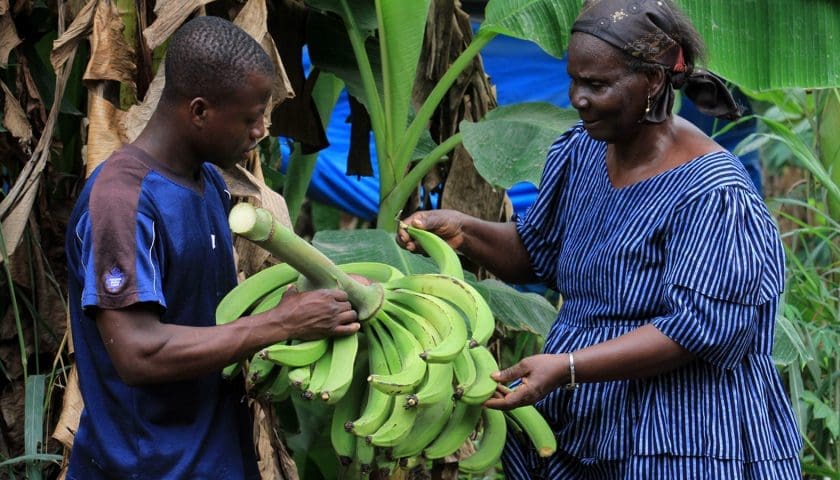
AFRICA – African banana producers could see their exports rise in the coming decades as climate change weakens output in leading Latin American banana-exporting nations.
This shift, highlighted in a recent report by Dutch financial services group Rabobank, suggests that changes in weather patterns will have uneven effects across the global banana market — and Africa may come out ahead.
Bananas remain the world’s most widely consumed and affordable fruit, but the global industry is facing serious climate-related problems. Countries like Colombia, Panama, Costa Rica, and Guatemala – which dominate banana exports to the US and EU – are now seeing higher temperatures, irregular rainfall, and increasing disease pressures.
This includes the spread of Tropical Race 4 (TR4), a soil-borne fungus that is devastating banana crops worldwide.
Rabobank’s report, titled “Climate change could compromise European and US banana sourcing,” projects that by 2050, the productivity of these top producers will drop significantly.
Colombia, the fourth-largest exporter of bananas in the world, is already classified as “high risk” due to its vulnerability to these conditions.
“These countries will face lower yields and rising production costs,” the report stated. “This will directly affect their competitiveness in the European and North American markets.”
Africa’s climate outlook offers hope for growers
In contrast, African producers such as Côte d’Ivoire and Cameroon are expected to benefit from more favourable growing conditions as the climate shifts. The report notes that all banana-producing countries in Africa could experience gains by 2050.
Côte d’Ivoire, Africa’s top banana exporter, stands to gain the most, thanks to both improved climate conditions and continued yield growth supported by better farming practices.
The Rabobank report explained, “The Eburnean nation is uniquely positioned to see positive effects from climate change while maintaining its leadership in yield improvement.”
Currently, Ecuador, Colombia, and Costa Rica supply nearly three-quarters of the European Union’s banana imports.
In the United States, Guatemala, Costa Rica, and Ecuador cover 76% of the demand. As production in these areas declines, African producers may be seen as a reliable alternative.
Infrastructure and investment still needed
Despite the promising outlook, the report emphasizes that African countries must address key weaknesses to seize this opportunity. “The African banana sector already benefits from a reputation for using fewer chemical inputs,” the authors said. “But that alone won’t be enough.”
Stronger investment is needed in disease control and yield improvement to meet rising demand. Infrastructure development, particularly in logistics, is also essential for countries like Côte d’Ivoire and Cameroon that rely heavily on the EU market.
“Exporters need to meet both quality and quantity demands while maintaining delivery timelines. That will require efficient logistics systems,” the report advised.
With climate patterns changing global trade, African producers have a chance to expand their role in the banana industry – if the right investments are made.
Sign up HERE to receive our email newsletters with the latest news and insights from Africa and around the world, and follow us on our WhatsApp channel for updates.