Marks & Spencer invests US$45M in UK chicken farming
Data on UK pig meat imports points to changing trade patterns across Europe
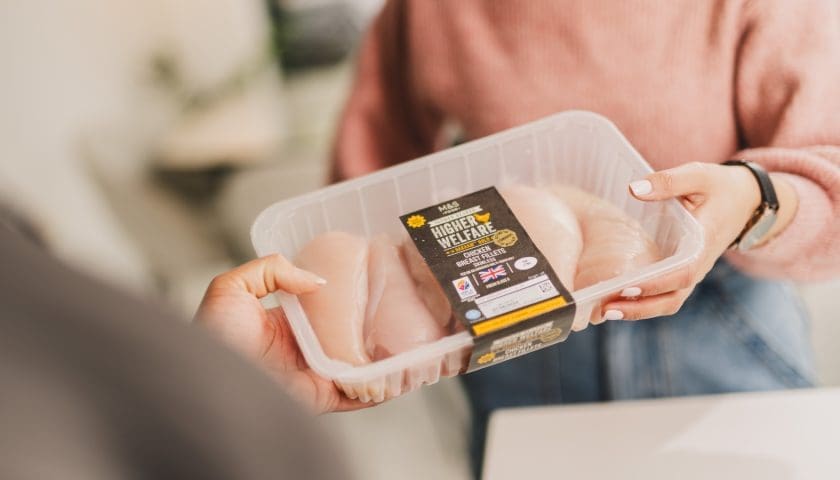
UK – Marks & Spencer has announced plans to increase its investment in British chicken farming to US$45 million (£36 million), citing higher consumer demand for its lower-priced poultry products.
The retailer said the additional funding represents a one-third rise in spending on its UK chicken supply chain and is linked to stronger sales of its Remarksable Value chicken range.
According to the company, products including Oakham Gold chicken legs, wings, and drumsticks recorded year-on-year sales growth of up to 21.4%.
This performance sits within a wider expansion of M&S value-focused food lines, with combined sales across the Remarkable Value, Dropped & Locked, and Bigger Pack, Better Value ranges increasing by around 20%.
The retailer said these ranges now cover more than 100 everyday grocery items, offering larger pack sizes and fixed-price essentials aimed at cost-conscious households.
To support higher volumes, M&S plans to bring additional Oakham Gold chicken farms into production and invest in new breeding and rearing facilities across the UK.
The company said it remains the only major UK retailer selling exclusively RSPCA Assured fresh chicken and confirmed that all Oakham Gold birds are slow-grown, fed a multigrain diet, and reared with additional space.
M&S added that it continues to participate in the Better Chicken Commitment and that the latest expansion aligns with its Plan A sustainability programme, which includes regenerative farming practices.
The retailer also said it continues to source all chicken, beef, pork, and milk sold in its stores from British suppliers.
As a result of the increased flock size, annual wheat demand for chicken feed is expected to rise from 25,000 tonnes to 30,000 tonnes, with supplies sourced from southwest England and Scotland.
Alex Freudmann, managing director of M&S Food, said customers are prioritising value while maintaining expectations around quality, while Kathryn Turner, director of product development, said demand is shifting away from chicken breasts toward cuts such as thighs and drumsticks.
UK meat trade context
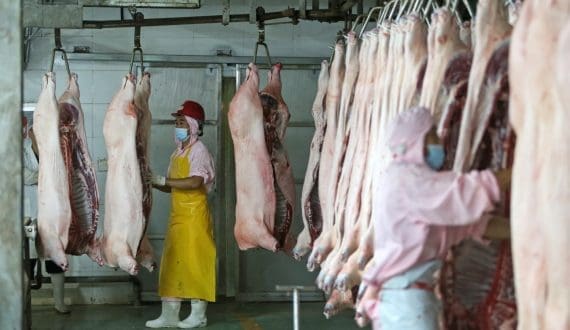
The expansion comes as new figures show UK pig meat imports remained largely stable in September at 63,800 tonnes, close to volumes recorded in recent years, according to AHDB data.
During the third quarter, total pig meat imports, including offal, declined by 3% year-on-year to 187,500 tonnes, demonstrating a reduction of 5,700 tonnes.
Shipments from Germany and the Netherlands fell compared with the same period last year, while imports from Denmark increased.
From January to September, cumulative pig meat imports dropped by 4% to 558,700 tonnes, the lowest total for the first nine months of the year since 2021.
Fresh and frozen pork imports declined by 4% to 9,900 tonnes, sausages fell 3% to 3,800 tonnes, and bacon imports decreased by 3% to 3,500 tonnes.
Denmark’s bacon exports to the UK fell by 15%, while increased shipments from Ireland partially offset the decline, as Germany, Belgium, and Spain saw mixed movements following disease-related trade disruptions.
Sign up HERE to receive our email newsletters with the latest news and insights from Africa and around the world, and follow us on our WhatsApp channel for updates.