South African citrus exports forecast to rise 3-5% in 2026 on global supply gaps
Nevertheless, trade policy uncertainty and logistics costs remain structural challenges.
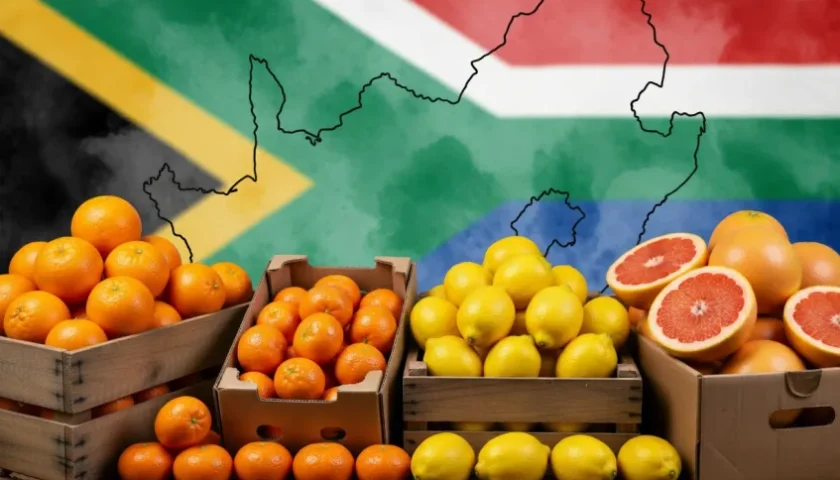
SOUTH AFRICA – South African citrus exports are forecast to increase by 3-5% in the 2026 season, supported by stable weather conditions and improved fruit quality, while Northern Hemisphere production faces weather-related declines, according to the Absa AgriTrends Report.
Northern Hemisphere citrus production for 2025/26 is forecast to decline by 1.51%. Orange production is expected to fall by 2.16%, and lemons by 12.28%, while soft citrus production is projected to increase by 5.91%.
Spain recorded its smallest orange crop in 16 years due to adverse weather during the flowering stage. Florida continues to face production challenges linked to Hurricane Milton, drought, and heat stress.
As a result, tighter supplies of oranges and lemons in the European Union could create short-term market opportunities for South African exporters.
However, several global factors are driving South Africa’s citrus export growth. First, favourable local weather has produced high-quality, exportable fruit across key growing regions.
Second, Brazil is expected to increase orange production by 3.84% to 13.5 million tons, driven by improved weather and disease management, thereby adding to competitive pressure.
Third, Egypt continues to expand production through orchard maturation and investment in processing.
Additionally, weather patterns and trade policies directly affect market opportunities. The United States has maintained duty-free access for South African oranges, although soft citrus was temporarily affected by a 30% tariff under Section 122 of the Trade Act of 1974.
The temporary extension of AGOA until late 2026 has preserved market access, though exporters face ongoing policy uncertainty.
Regarding variety-specific risks and rewards, lemons are currently among the stronger short-term export categories, supported by early-season timing and reduced Northern Hemisphere supply. However, soft citrus faces ongoing oversupply risks during peak periods.
Furthermore, freight and logistics pressures, driven by shipping disruptions and higher transport costs, continue to squeeze margins. South-East Asia is increasingly seen as an alternative growth market for citrus exports, reducing reliance on traditional European buyers.
Nevertheless, trade policy uncertainty and logistics costs remain structural challenges. Therefore, exporters who diversify destination markets, invest in cold-chain reliability, and monitor Northern Hemisphere crop forecasts will capture premium pricing during supply gaps.
Ultimately, those who fail to adapt risk margin erosion, even in favourable weather, with cautious optimism prevailing.
Sign up HERE to receive our email newsletters with the latest news and insights from Africa and around the world, and follow us on our WhatsApp channel for updates.