

Vietnam repositions dragon fruit exports toward premium quality, reduces China dependence
Vietnam’s dragon fruit strategy is shifting toward premium global standards through several key initiatives.
VIETNAM – Vietnam’s dragon fruit export sector has shown recovery in early 2026, with total export turnover increasing by approximately 15% compared to the same period in 2025, while demand is diversifying away from its traditional reliance on China.
According to Henry Le of Funi Farm Import Export Co., exports to China remain stable, but India has emerged as the second-largest growth market. Exports to Thailand have nearly tripled compared to previous years.
“India is showing roughly 26% growth in demand as dragon fruit becomes more popular in major cities,” Henry said. White-fleshed fruit remains the preferred variety in the Indian market due to competitive pricing and stable supply.
Vietnam’s dragon fruit strategy is shifting toward premium global standards through several key initiatives. For instance, farmers are using artificial lighting to stimulate flowering, increasing productivity from one crop to two or three crops per year.
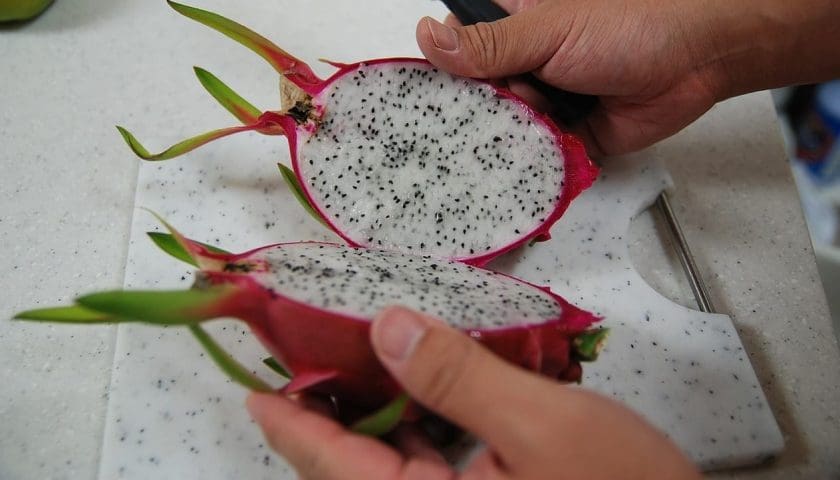
Dragon fruit grown with artificial lighting yields higher productivity and more consistent quality. Red-fleshed varieties are increasingly securing premium orders due to vivid appearance and sweetness levels of 15–18% Brix, while white-fleshed fruit continues to dominate production with stable Brix levels.
Funi Farm is upgrading its GlobalG.A.P. standards to improve access to premium supermarket channels in Europe and North America. The company is also trialling new dragon fruit varieties with higher sweetness and longer shelf life, while exploring processed dragon fruit products to reduce reliance on fresh exports alone.
Furthermore, Funi Farm is expanding exports of seedless lemons, passion fruit, bananas, mangoes, coconuts, cinnamon, and star anise.
Emerging competitors such as Ecuador, Colombia, and India are reshaping market dynamics. China remains Vietnam’s largest customer and one of its strongest competitors, while domestic growers are investing heavily in modern cultivation techniques.
On the other hand, Ecuador and Colombia are strengthening their position in premium markets through attractive, red-fleshed varieties and stronger branding. India is rapidly expanding domestic dragon fruit production in Gujarat and Maharashtra states, even as it continues to import Vietnamese fruit.
“The future of Vietnamese dragon fruit will depend less on quantity and more on consistency, traceability, post-harvest handling, and meeting stricter international standards,” Henry said.
Vietnam’s repositioning offers alternative sourcing options beyond Latin America, provided exporters meet Gulf market requirements for traceability and food safety.
Vietnamese suppliers are moving from competing on price toward competing on brand, quality, and reliable long-term supply.
Sign up HERE to receive our email newsletters with the latest news and insights from Africa and around the world, and follow us on our WhatsApp channel for updates.

