

Jordan expands Aqaba Port capacity as Iraq transit containers surge 933%
Containers are now unloaded at Aqaba and transported approximately 760 kilometres by truck to Iraq, according to port officials.
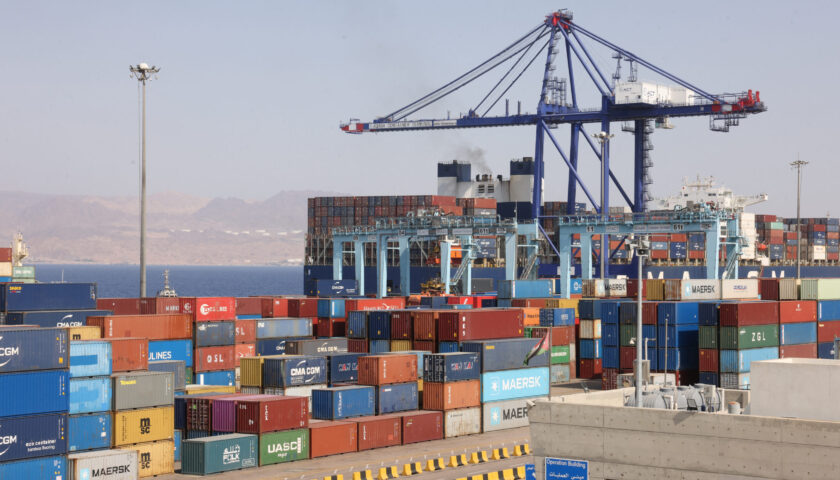
JORDAN – Jordan’s Transport and Labour Minister Nidal Qatamin has discussed plans to expand handling capacity at Aqaba Port with shipping companies and the Aqaba Container Terminal (ACT), amid rising transit cargo bound for Iraq, Jordan News Agency (Petra) reported.
The discussions centred on expanding container yard capacity, accelerating handling operations and reducing waiting times to ensure a smoother flow of goods through the Kingdom’s main seaport.
Qatamin said that improving port efficiency and facilitating cargo movement would enhance Jordan’s competitiveness as a regional transport and logistics hub and support the national economy.
He called for closer coordination among stakeholders to address operational and logistics challenges and speed up procedures.
Transit cargo volumes surge
The capacity discussions follow a 155.1% increase in transit cargo at Aqaba in the first half of 2026 compared with the same period last year, according to ACT data.
Meanwhile, transit containers through Aqaba rose from 30,763 in the first seven months of 2025 to 80,235 in the same period of 2026, a 160.8% increase, according to the Jordan Shipping Association.
The most pronounced growth was recorded in transit containers destined for Iraq, which rose from 3,599 to 37,182, a 933.1% increase. Meanwhile, refrigerated transit containers rose 546.8%, while incoming refrigerated containers rose 20.9%.
Hormuz disruption redirects Iraq-bound trade
The growth follows the sharp reduction in commercial traffic through the Strait of Hormuz, prompting traders to consider alternative routes. Iraq previously imported consumer goods through its southern Gulf port at Basra, but commercial traffic there has fallen sharply.
Containers are now unloaded at Aqaba and transported approximately 760 kilometres by truck to Iraq, according to port officials. Total truck movements through the Karama-Trebil border crossing rose 131.2% from 99,491 to 229,997 trucks, while loaded trucks departing Jordan toward Iraq increased 148.9%.
Infrastructure investment
Jordan is advancing rail connectivity projects to solidify Aqaba’s role in emerging trade corridors. The Aqaba Port Railway Project, estimated to cost about US$2.3 billion, runs nearly 360 kilometres and has a capacity of up to 16 million tonnes annually, according to Qatamin. Jordan and the UAE are implementing it as an equal partnership, with each party holding a 50% stake.
Finally, this expansion positions Aqaba as a permanent logistics corridor for Iraq and neighbouring markets, with Jordan maintaining a focus on infrastructure investment and operational efficiency.
Sign up HERE to receive our email newsletters with the latest news and insights from Africa and around the world, and follow us on our WhatsApp channel for updates.