
Barry Callebaut, Zurich University join forces to explore lab-grown cocoa solutions
Cell-cultivated cocoa can be customized to have higher antioxidant content or lower fat levels, potentially leading to more concentrated health benefits compared to traditionally grown cocoa.
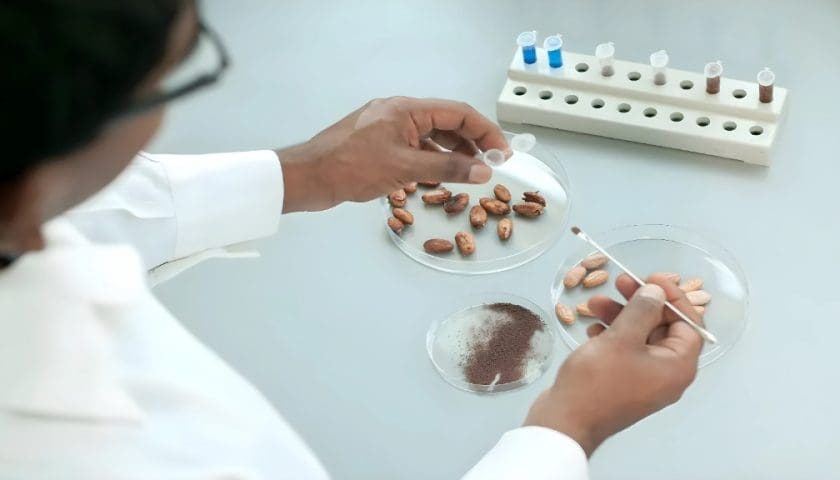
SWITZERLAND – Barry Callebaut, a global manufacturer of high-quality chocolate and cocoa solutions, has entered into a strategic partnership with the Zurich University of Applied Sciences (ZHAW) to explore the potential of cocoa cell culture technology.
This collaboration is part of Barry Callebaut’s long-term commitment to innovation and sustainability in the chocolate industry.
Cocoa cell culture is an emerging field that enables the cultivation of cocoa cells in a controlled environment.
This technology presents promising opportunities to develop new chocolate products with unique flavor profiles or enhanced health benefits.
Additionally, it provides an alternative cocoa source to diversify the company’s cocoa portfolio, while also strengthening supply chain resilience and supporting traditional cocoa farming communities.
The collaboration brings together Barry Callebaut’s deep expertise in chocolate with the scientific leadership of ZHAW Professors Tilo Hühn and Regine Eibl, renowned for their pioneering work in cell culture technologies. Their teams bring decades of experience and a strong portfolio of scientific publications to the project.
“Our research into cocoa cell culture technology opens up exciting possibilities for sustainable innovation in the chocolate industry. With Barry Callebaut’s support, we’re able to accelerate our scientific exploration and bring academic insights closer to real-world applications,” Professor Dr. Tilo Hühn and Professor Dr. Ing. Regine Eibl-Schindler.
This initiative is part of a broader innovation strategy at Barry Callebaut, focused on exploring disruptive technologies that can unlock new product possibilities and enhance sustainability across the entire value chain.
In recent years, the emergence of cocoa cell culture has garnered significant attention, with companies such as California Cultured in the US and Celleste Bio in Tel Aviv leading the charge.
These innovators are challenging traditional cocoa supply chains by developing lab-grown cocoa ingredients that replicate the flavor and functionality of farm-grown beans, offering a more sustainable and controlled alternative.
While the potential of cocoa cell culture has been widely praised, attracting major players like Puratos and Mondelēz International, concerns have arisen within cocoa-producing nations about its impact on local economies and livelihoods.
As these new technologies reshape the cocoa market, stakeholders in these regions worry about the potential disruption to established farming communities.
Despite these concerns, Dries Roekaerts, President of Customer Experience at Barry Callebaut, reassures that the company is not seeking to replace conventionally grown cocoa.
“We are not replacing cocoa from farms, but rather preparing for a future where we can offer consumers additional choices and ensure long-term supply security,” he emphasized, underscoring the company’s commitment to enhancing sustainability without undermining traditional cocoa farming.
Sign up HERE to receive our email newsletters with the latest news and insights from Africa and around the world, and follow us on our WhatsApp channel for updates.