
Coalition for Fisheries Transparency applauds full ratification of Cape Town Agreement
The Cape Town Agreement establishes binding safety regulations for large commercial fishing vessels. Its enforcement is expected to reduce illegal, unreported, and unregulated (IUU) fishing.
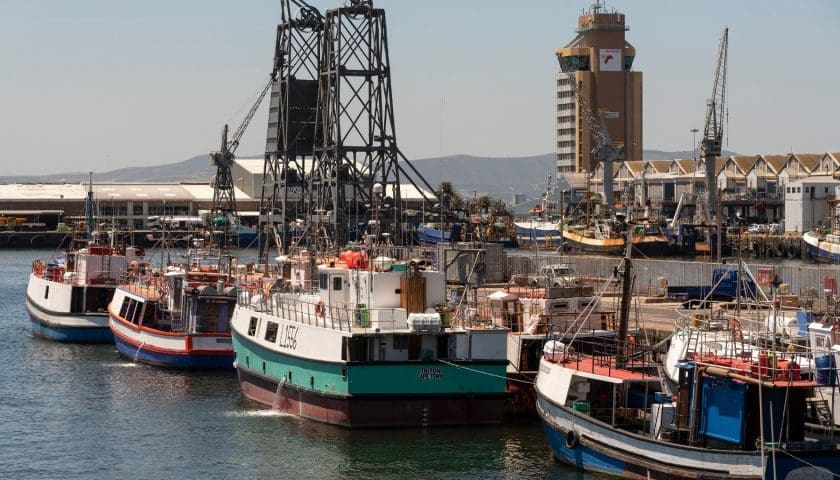
SOUTH AFRICA – The Coalition for Fisheries Transparency (CFT) confirmed that the Cape Town Agreement, aimed at improving the safety of fishers at sea, has achieved full ratification.
The treaty, developed under the International Maritime Organization (IMO), mandates essential safety requirements for commercial fishing vessels, including fire prevention, life-saving equipment, emergency procedures, radiocommunications, vessel stability, and seaworthiness.
Before this agreement, no international rules required commercial fishing vessels to meet uniform safety standards.
With the recent ratifications by the Solomon Islands, South Korea, and Argentina, the agreement now includes 28 member states representing 3,754 fishing vessels, triggering its scheduled entry into force within one year.
Maisie Pigeon, director of CFT, highlighted that the treaty sets minimum safety benchmarks for crews on large fishing vessels worldwide and forms part of the Global Charter for Fisheries Transparency.
Fishing is among the most hazardous occupations, with global fatalities exceeding 100,000 annually, according to recent research, and unsafe working conditions are more common on vessels engaged in IUU fishing.
Globally, approximately 45,000 fishing vessels exceed 24 meters in length, giving the Cape Town Agreement significant reach to standardize safety measures across large-scale fisheries.
Experts note that properly maintained and healthy crews contribute directly to fisheries’ operational success, aligning the agreement with other regulations such as the Food and Agriculture Organization’s Port States Measures Agreement and the International Labour Organization’s Work in Fishing Convention (No. C188).
Peter Thomson, UN Secretary-General’s Special Envoy for the Ocean, stated that the ratification represents progress for both crew safety and IMO initiatives, following recent treaties covering high seas biodiversity and WTO fisheries subsidies.
Milko Schvartzman of Argentina’s Círculo de Políticas Ambientales said the agreement will impose stricter crew safety and labor standards, helping address human exploitation, overfishing, and IUU activity, especially in regions like the Southwest Atlantic.
Safety at sea has been a global concern since the 1912 Titanic disaster, and while commercial shipping adopted the International Convention for the Safety of Life at Sea in 1974, fishing vessels had no treaty-level protections despite efforts in 1977 and 1993.
Vivien Deloge, UK coordinator for CFT, noted that the upcoming implementation ends a decades-long gap in international protection for fishers and called on remaining IMO members to ratify the treaty to promote global transparency in fisheries.
Once enforced, the agreement allows member states to inspect vessel safety and crew conditions, creating more accountability and supporting legal, sustainable, and transparent fishing practices worldwide.
Sign up HERE to receive our email newsletters with the latest news and insights from Africa and around the world, and follow us on our WhatsApp channel for updates.