
Ede Food Innovation Park to drive sustainable protein development across Europe
The innovation park will accelerate research on alternative, more sustainable protein sources, including plants, algae, and fermentation.
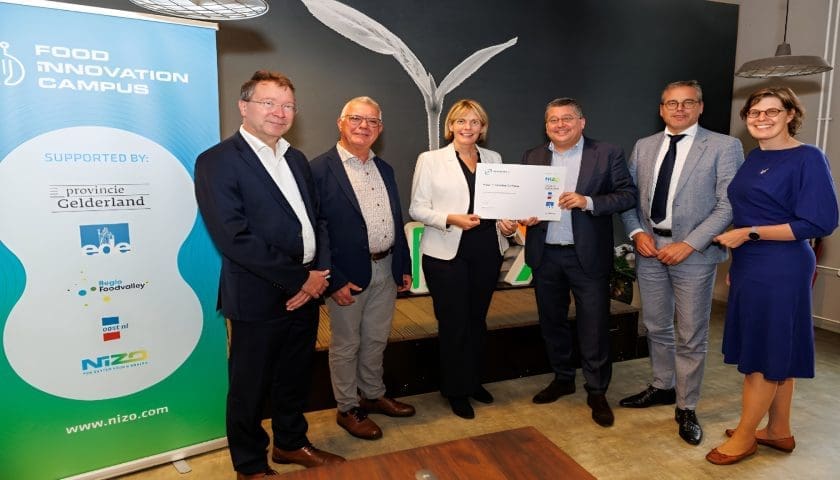
NETHERLANDS – The Netherlands is set to take a bold step in advancing sustainable food systems with the transformation of the NIZO site in Ede into a new food innovation park.
This hub will bring together start-ups, scale-ups, corporates, and knowledge institutions to collaborate on the future of sustainable proteins and the broader food transition.
With state-of-the-art facilities, including a unique food-grade pilot plant and the recently established Biotechnology Fermentation Factory (BFF), the park is positioning itself as Europe’s leading centre for protein innovation and the upscaling of sustainable food ingredients.
The facilities in Ede are vital for bridging the gap between research and market application.
While new protein sources can be discovered in laboratories, their successful development requires testing, scaling, and production under food-grade conditions.
Proteins, the essential building blocks for muscle development, energy, and recovery, are traditionally derived from meat and dairy, which demand vast amounts of farmland, water, and energy.
To address these challenges, the innovation park will accelerate research on alternative, more sustainable protein sources, including plants, algae, and fermentation.
Building a Strategic Hub in the FoodValley Region
The Ede Food Innovation Park aligns with Wageningen’s strong agrifood ecosystem, which is home to Wageningen University & Research and a vibrant start-up and innovation community.
Whereas Wageningen excels in research and education, the Ede site will focus on testing, scaling, and preparing innovations for the market in close collaboration with industry.
Together, these locations form a complementary partnership, reinforced by the Food Innovation District near Ede railway station.
This strategic triangle of knowledge, research, entrepreneurship, and business readiness strengthens the FoodValley Region’s position as a leading international food hub.
The initiative is supported by a coalition of partners, including NIZO, the Province of Gelderland, the Municipality of Ede, the FoodValley Region, and Oost NL.
Their shared vision is to build a dynamic ecosystem that connects knowledge and research directly with market introduction.
“We are building a place where ideas can flourish faster, where entrepreneurship thrives, and where innovations contribute to a future-proof food system,” said Bert Fintelman, politically responsible for the Protein Transition theme in the FoodValley Region.
An independent exploratory study has confirmed broad support for the project.
Its findings were presented on 17 September to regional and provincial leaders, including Helga Witjes, Provincial Executive member for Economy and Innovation in Gelderland, and Arnold Versteeg, Alderman for Economy of the Municipality of Ede.
The next development phase will concentrate on property construction, establishing a facility organisation, and exploring the spin-off of the pilot plant as an independent entity to ensure accessibility for companies and research institutions.
Nikolaas Vles, CEO of NIZO, highlighted the ambition behind the project: “Our goal is clear: to become Europe’s leading ecosystem for scaling alternative proteins and driving the food transition. By combining world-class facilities with collaboration across start-ups, companies, and research institutions, we can accelerate innovations to market and shape the future of food.”
Through this effort, Ede and the wider FoodValley Region are laying the foundation for a healthier and more sustainable global food system.
The food innovation park is expected to become a driving force in positioning the Netherlands and Europe at the forefront of alternative protein development and the global food transition.
Sign up HERE to receive our email newsletters with the latest news and insights from Africa and around the world, and follow us on our WhatsApp channel for updates.