

EU pig slaughtering rises for second consecutive year in 2025
EU pig slaughtering increased in 2025, with Spain leading; pork production grew despite trade challenges with China.
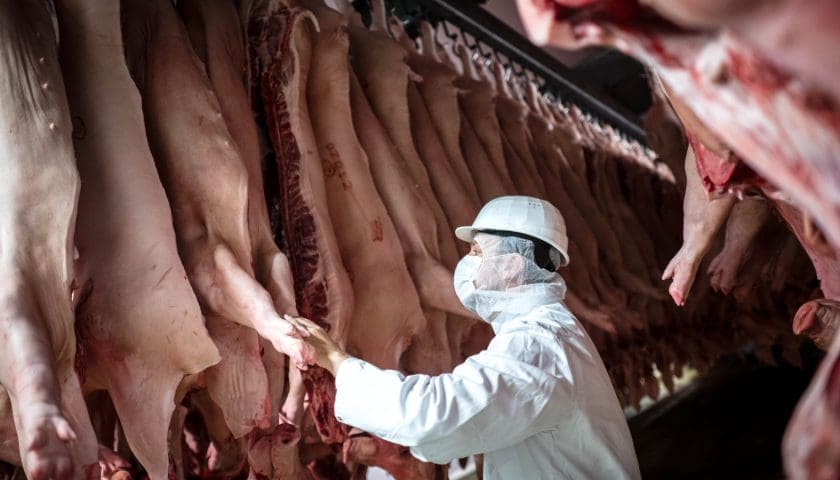
EUROPE – Pig slaughtering across the European Union rose for the second year in a row between January and November 2025, reaching roughly 207.7 million animals, a 2% increase from the previous year.
The total weight of pork carcasses produced climbed by 3.1% to approximately 19.95 million tons.
Spain maintained its position as the EU’s largest pig producer, recording 51.6 million animals slaughtered, up 4.3% from 2024.
Germany remained the second-largest producer with 41.2 million pigs slaughtered, showing little change from the previous year with a 0.2% rise.
Poland saw its slaughter figures increase by 3.7% to 18.9 million pigs, while France recorded a slight 0.1% drop to 20.1 million animals.
Other countries including Denmark (+1.7%), Portugal (+3.4%), and Hungary (+3.3%) reported higher slaughter numbers, whereas Italy (-0.7%) and Belgium (-0.6%) experienced minor declines.
Despite overall growth, EU pork production remains below levels seen earlier, indicating that the recovery remains incomplete.
The increase in production comes amid rising average carcass weights, which contributed more significantly to the 3.1% expansion in pork output than the number of animals slaughtered.
European pork exporters are facing challenges as China introduced provisional anti-dumping tariffs of up to 62.4% on imports from the EU, affecting over US$2 billion in annual trade.
China, which accounts for roughly a quarter of Europe’s pork exports, had seen shipments rise by 4% in the first half of 2025 following three years of declines.
Much of the EU pork sent to China consists of offal such as ears, feet, and snouts, products with limited demand outside the country, leaving suppliers with few alternative markets.
French pork industry group Inaporc warned that exports would continue under the new tariffs.
Still, returns would be lower, and vice president Thierry Meyer suggested this could reduce farmgate prices and overall production.
The sector had been showing signs of recovery due to lower feed and energy costs, but the new trade restrictions raise concerns that the rebound could stall.
Sign up HERE to receive our email newsletters with the latest news and insights from Africa and around the world, and follow us on our WhatsApp channel for updates.

