FAO warns Strait of Hormuz crisis is squeezing farmers’ margins, raising food prices
“Peace and stability are prerequisites for food security, and the right to food is a basic human right,” Qu said in his address.
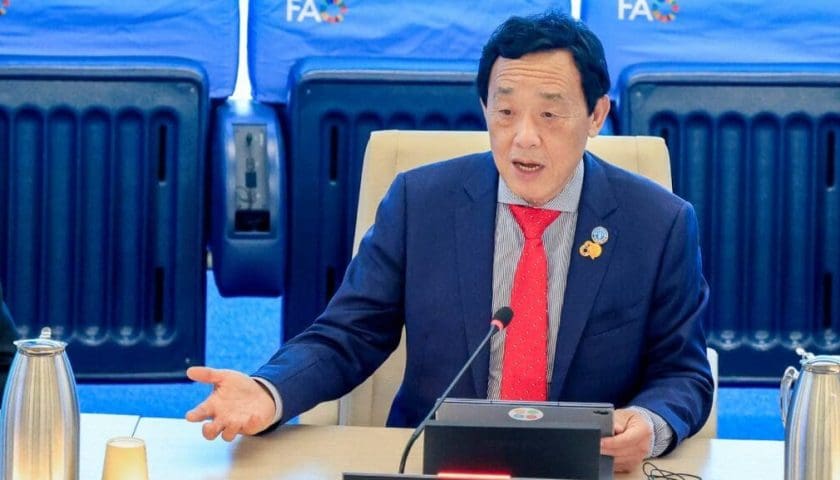
GLOBAL – The ongoing crisis in the Gulf region is sending shockwaves through global agrifood systems, with fertilizer prices rising nearly 20% within a week and an estimated 1.5 to 3 million tons of fertilizer trade delayed per month, according to FAO Director-General Qu Dongyu.
During the 180th Session of the FAO Council, he warned that maritime disruptions threaten agricultural productivity and food security across the Middle East, Africa, and Asia.
“Peace and stability are prerequisites for food security, and the right to food is a basic human right,” Qu said in his address.
For farmers and agrifood investors, rising energy and fertilizer costs are squeezing margins and potentially lowering future crop yields. By mid-April, urea prices increased by 52% in the United States and 60% in Brazil.
Gulf countries rely on imports for 70% to 90% of their staple food supply, forcing shipments to take longer routes at higher costs. Rising energy prices directly increase the cost of living and food prices for consumers, while higher production costs immediately shrink farmers’ profitability.
Therefore, alternative trade routes could mitigate disruptions, but developing them requires coordinated international action and significant investment. The FAO advocates for enhanced market monitoring, avoiding export restrictions on energy and fertilizers, and providing financial support to farmers.
In addition, the crop calendar adds urgency. “Fertilizer applications must align precisely with planting windows that cannot be rescheduled without permanent yield losses,” Qu said. Delays in inputs now will reduce harvests months later, triggering a hunger cascade across dependent regions.
“We have the technical expertise; what we need now are the resources to act, in line with our mandate, before this closure has a catastrophic impact on our agrifood systems and on food security globally,” the Director-General said. “History judges organizations not by the crises they predicted, but by the suffering they prevented.”
Therefore, investment in regional fertilizer production, renewable energy for agriculture, and overland trade corridors could reduce exposure to future Gulf disruptions.
Further, the FAO’s medium-term strategy prioritizes sustainable agriculture and renewable energy investments, signaling where development finance and private capital may be directed in the coming years.
As overlapping shocks from the crisis escalate food price inflation, coordinated action over the next 90 days will be critical to preventing catastrophic impacts on global agrifood systems.
Sign up HERE to receive our email newsletters with the latest news and insights from Africa and around the world, and follow us on our WhatsApp channel for updates.