SokoFresh secures US$500,000 from UNCDF to expand solar cold storage
The deal comes amid tightening global aid flows, prompting development agencies to experiment with instruments to attract private capital.
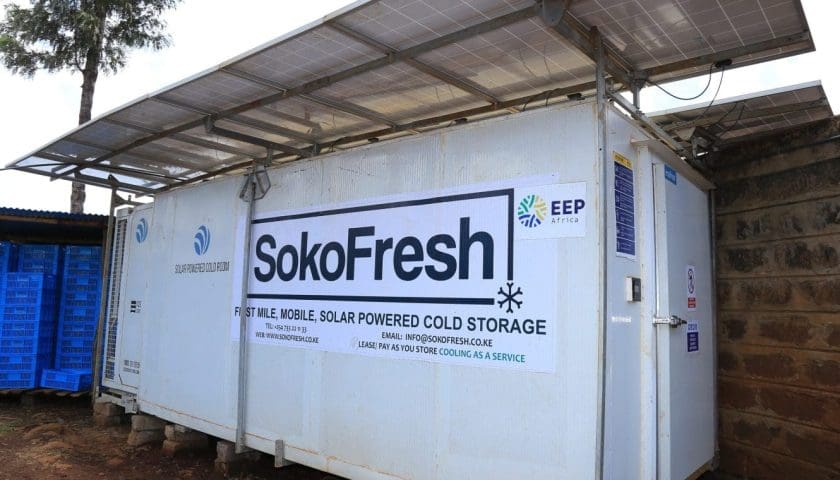
KENYA – SokoFresh, a Kenyan agritech company, has secured KSh 65 million (US$500,000) in concessional debt financing from the United Nations Capital Development Fund (UNCDF) through a food systems investment vehicle backed by the Bayer Foundation.
The four-year local-currency loan will expand the company’s solar-powered cold storage and aggregation services across Kenya’s horticultural and staple-crop value chains, reaching approximately 5,000 smallholder farmers each year.
According to the World Resources Institute, Kenya loses up to 40% of its harvests due to poor transport and inadequate storage, with maize, potatoes, mangoes, avocados, and bananas among the most affected crops.
Therefore, solar-powered cold storage reduces spoilage, extends market access, and enables farmers to sell during peak pricing windows rather than being forced to sell immediately after harvest.
“Strengthening food systems and reducing post-harvest losses is critical to improving outcomes for smallholder farmers across Sub-Saharan Africa. This catalytic financing enables us to deliver inclusive market access and financial solutions that ensure smallholder farmers have access to reliable markets, prompt payments, and fair pricing,” said Denis Karema, CEO of SokoFresh.
The UNCDF investment reflects a broader shift in development finance towards catalytic lending rather than grant-based support.
In addition, the concessional terms are designed to absorb early-stage risk in markets where commercial lenders have been reluctant to extend credit on scale. SokoFresh’s financing ties repayment to operational milestones, including expanded farmer reach and efficiency targets for cold storage utilization.
Regarding agritech funding trends in Africa, this deal signals growing interest among development agencies in blended finance instruments that can attract private capital into sectors traditionally reliant on donor funding.
On the other hand, solar-powered storage bridges critical infrastructure gaps in food systems by providing off-grid cold chain solutions that operate independently of unreliable national power grids.
For smallholder farmers in remote areas, access to such storage allows produce to be held until market conditions are favourable, reducing spoilage and increasing incomes.
The deal comes amid tightening global aid flows, prompting development agencies to experiment with instruments to attract private capital.
The company positions its model around reducing spoilage in transit and extending market access for perishable produce, a persistent constraint in East Africa’s fragmented agricultural supply chains.
As solar technology costs continue to decline, similar models could be deployed across Sub-Saharan Africa, transforming how smallholders participate in commercial fresh produce markets.
Sign up HERE to receive our email newsletters with the latest news and insights from Africa and around the world, and follow us on our WhatsApp channel for updates.