
Ghana secures US$20M Dutch grant to stabilize tomato supply after Burkina Faso export ban
The US$20 million injection signals government and development partner commitment to agricultural modernization.
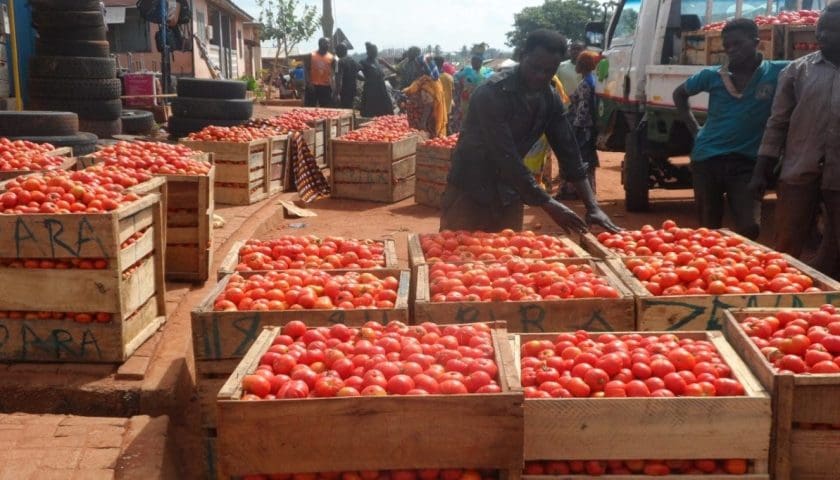
GHANA – Ghana has secured a US$20 million grant from the Dutch Ministry of Foreign Affairs to address tomato supply disruptions triggered by an export ban from neighboring Burkina Faso, a key supplier that has long filled gaps in the country’s fresh produce market.
The intervention, managed through the World Bank, aims to fortify local production systems and storage capacity while reducing dependence on volatile cross-border trade.
For regional food security, the crisis underscores a broader vulnerability. Burkina Faso’s export ban disrupted established supply chains, causing availability concerns and price volatility that ripple through West African markets.
As a result, when a primary supplier restricts exports, neighboring countries face immediate shortages that affect households, food processors, and hospitality operators alike. The Dutch-funded intervention directly targets this fragility by investing in domestic production clusters that can buffer against future trade disruptions.
In a statement, agricultural Economist Ashwini Sebastian outlined the programme’s approach during a World Bank and civil society engagement on food security in Accra. “Our colleagues from the Dutch embassy will come in. We have been able to leverage that small grant to get a US$20 million grant for tomato interventions in Ghana from the Dutch Ministry of Foreign Affairs, and so we are in the phase of designing that intervention,” she said.
Likewise, the initiative will focus on strengthening supply systems, improving storage infrastructure, and supporting local tomato production. Sebastian emphasized collaboration with industry stakeholders: “We will reach out to the tomato association more because we have been having some debates about location and trying to cluster the intervention.”
The US$20 million injection signals government and development partner commitment to agricultural modernization. Investment in cold storage facilities, irrigation systems, and processing plants that convert fresh tomatoes into paste, sauce, and puree aligns with the programme’s goals.
In addition, clustered interventions targeting specific farming regions create economies of scale that make private sector participation more viable. Strengthening local production also reduces exposure to cross-border trade shocks, creating a more reliable procurement environment for regional food businesses.
However, the programme is currently in its design phase, with implementation expected to involve direct engagement with tomato traders, farmers, and industry associations.
For stakeholders across the fresh produce and logistics sector, Ghana’s targeted investment in supply chain resilience offers a model for how development funding can transform agricultural vulnerability into competitive strength.
Sign up HERE to receive our email newsletters with the latest news and insights from Africa and around the world, and follow us on our WhatsApp channel for updates.