

Global Tequila market set for continued growth to 2030 – IWSR
IWSR forecasts continued tequila growth through 2030, with emerging markets offsetting slower US demand as premiumisation and expanding global distribution reshape the category.
GLOBAL – The global tequila market is expected to maintain steady growth through 2030 despite slowing demand in its largest market, the United States, as emerging economies increasingly drive consumption and premiumisation reshapes the category, according to the latest data from IWSR.
Global tequila volumes increased at a compound annual growth rate (CAGR) of 6 percent between 2019 and 2025 and are projected to expand at a CAGR of 2 percent through 2030.
The forecast represents an improvement over the 2 percent volume growth recorded during the past year, highlighting continued opportunities for the category outside its traditional markets.
The United States remains the world’s largest tequila market, accounting for more than two-thirds of global volumes. However, rapid expansion has slowed considerably, with volumes remaining flat during 2024-25 and expected to decline slightly this year.
According to Adam Rogers, North American Research Director at IWSR, competition has intensified as market growth slows.
“With approximately 2,500 registered tequila trademarks, roughly 900 viable competitors in the US, and only approximately 500 generating more than US$10,000 in large retail, shelf space is highly contested,” Rogers said.
Despite the broader slowdown, premiumisation continues to reshape the US market. Ultra-premium tequila remains the fastest-growing price segment, with volumes increasing 7 percent during 2024-25 following a 31 percent CAGR since 2019. Its share of US tequila volumes has nearly tripled from 6 percent in 2019 to 17 percent last year and is forecast to reach 21 percent by 2030.
Mexico, the second-largest tequila market, is also showing renewed momentum. After declining at a CAGR of 2 percent between 2019 and 2025, volumes rebounded with 3 percent growth during 2024-25 and are forecast to grow at a CAGR of 3 percent through 2030.
“The 2026 FIFA World Cup should provide a meaningful near-term tailwind for tequila in Mexico,” said Jose Luis Hermoso, Research Director Central and South America at IWSR.
He added, “Meanwhile, a slower US tequila market and much lower agave prices for tequila production will mean more focus by brand owners and producers on the domestic scene, which was neglected in the past when tequila was booming in the US.”
Beyond North America, several emerging markets are becoming increasingly important to tequila’s growth. India has emerged as the fastest-growing major market, with volumes expanding at a CAGR of 32 percent between 2019 and 2025, rising 34 percent during the past year and forecast to grow at a CAGR of 13 percent through 2030.
Jason Holway, Senior Research Consultant at IWSR, said India’s growth coincided with improving product availability.
“Tequila’s growing popularity in India has coincided with a downturn in the category’s fortunes in the US market, increasing availability. There may have been allocation issues had the spike in India come a year or two earlier,” Holway said.
Colombia is also emerging as a high-growth market after recording 26 percent volume growth during 2024-25.
According to Jessica Ibarra, IWSR Market Analyst, “The category is experiencing a surge in popularity and trendiness, reflected in robust growth. Volumes have doubled since the pre-pandemic levels of 2019.”
Other expanding markets include Nigeria, Türkiye and Japan, all of which are expected to contribute to global growth over the forecast period.
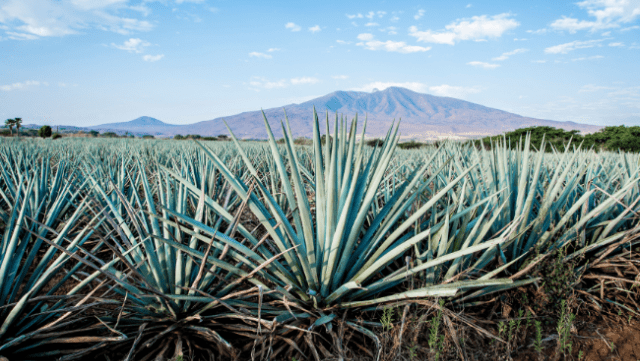
IWSR also expects falling agave prices, driven by oversupply following extensive planting between 2015 and 2022, to lower production costs over the next three to five years.
“The agave supply cycle suggests that raw material costs could ease meaningfully within three to five years as current over-planting becomes ready to harvest,” Hermoso said. “Producers who can sustain margin discipline through this period will benefit from a more favourable input cost environment.”
Hermoso concluded, “The centre of gravity is not shifting away from the US, but the category’s growth story increasingly depends on what happens outside it. Promising markets outside the US and Mexico create both an opportunity and a sequencing challenge for brand owners in the years ahead.”
Sign up HERE to receive our email newsletters with the latest news and insights from Africa and around the world, and follow us on our WhatsApp channel for updates.