

Hapag-Lloyd absorbs US$50M weekly losses as Gulf conflict strands vessels, disrupts 25,000 shipments
Real-time cargo tracking has emerged as a critical risk mitigation tool.
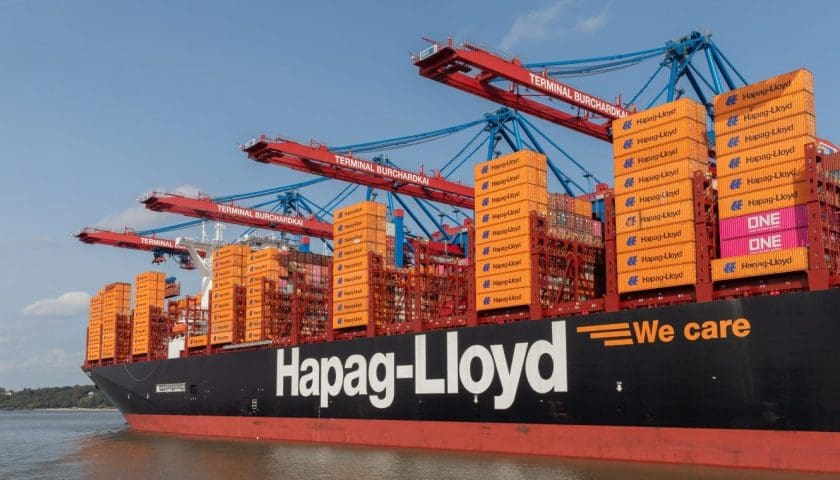
GLOBAL – Hapag-Lloyd is incurring additional costs of US$40 million to US$50 million per week as geopolitical conflict in the Middle East disrupts shipping routes, strands vessels, and forces the company to rethink operations through the Strait of Hormuz.
Chief Executive Officer Rolf Habben Jansen outlined the scale of the crisis during a press briefing in Mumbai on March 19.
First, six Hapag-Lloyd vessels, both owned and chartered remain stuck in the Persian Gulf, with approximately 3,000 ships total affected in the region. One vessel has already sustained damage after being hit, resulting in a fire and structural holes in the hull. All crew members are safe.
In the briefing Jansen stated that, “Costs are going up tremendously,”. “We today have extra costs of about US$40 million to US$50 million per week. That’s very, very significant.” He emphasized that the financial burden cannot be sustained internally, warning that cost-sharing conversations with partners will be necessary.
In addition, for Middle Eastern investors and hospitality stakeholders, these disruptions translate directly to rising logistics costs.
However, the operational impact extends beyond costs. Approximately 25,000 shipments are currently affected by the disruption, with Hapag-Lloyd prioritizing crew safety by pausing sailing through high-risk zones. “Our ships will not go into that trade area for now because it is simply not safe,” Jansen stated, referring to areas around the Strait of Hormuz.
More importantly, real-time cargo tracking has emerged as a critical risk mitigation tool. “We have all our boxes equipped with trackers, and we’re the only ones who have done that,” Jansen explained. “For all shipments that are on their way or stuck in the Middle East, we will make that information available to all our customers. That means everybody will know where his or her box is.”
For regional business owners, this visibility enables proactive supply chain management. Knowing exactly where perishable goods are located allows buyers to adjust inventory planning, communicate with customers, and make informed decisions about substitutions or expedited alternatives. Technology reduces uncertainty, a key operational challenge during logistics disruptions.
As the conflict persists, shipping lines face mounting pressure to balance safety, operational continuity, and financial sustainability.
For the fresh produce and logistics sectors in the Middle East and Africa, the crisis underscores the importance of supply chain diversification, real-time visibility tools, and contingency planning in an era of geopolitical instability.
Sign up HERE to receive our email newsletters with the latest news and insights from Africa and around the world, and follow us on our WhatsApp channel for updates.