Hapag-Lloyd, Kuehne+Nagel partner on low-carbon shipping, target 3,000 tonnes CO₂e reduction
The companies said this model supports scalable climate action while sustainable marine fuels remain scarce.
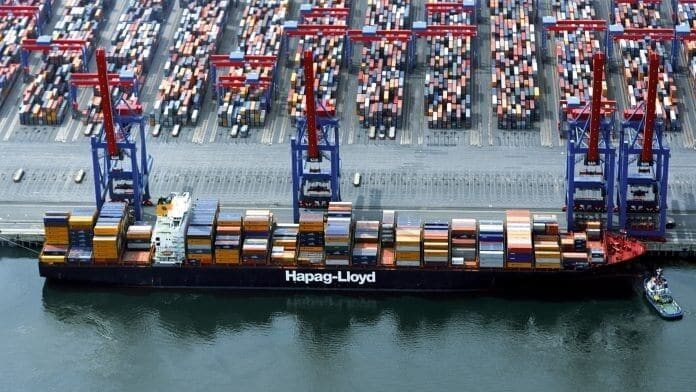
GLOBAL – Hapag-Lloyd and Kuehne+Nagel have launched their first joint initiative on sustainable ocean freight, aiming to reduce around 3,000 tonnes of CO₂e emissions in 2026 using sustainable marine fuels.
For logistics operators and fresh produce supply chains, this partnership demonstrates how carbon-reduction targets can be achieved without waiting for green fuel to be available at every port.
How the Book-and-Claim System Works
The agreement will see Kuehne+Nagel use Hapag-Lloyd’s Ship Green product to reduce the carbon footprint of its ocean freight shipments. From April to December 2026, approximately 3,300 TEU of cargo on the East Asia to North Europe trade lane will be covered by the partnership.
The companies said the initiative will use about 1,000 tonnes of RED III-compliant, waste-based sustainable marine fuels and is expected to avoid nearly 2,979 tonnes of CO₂e emissions on a well-to-wake basis.
The agreement is based on a book-and-claim chain-of-custody mechanism, allowing customers to claim verified emission reductions regardless of where the fuel is used.
Therefore, only emissions reductions from biofuel already used in Hapag-Lloyd’s operated fleet will be allocated to Kuehne+Nagel. The companies said this model supports scalable climate action while sustainable marine fuels remain scarce.
Statements from Leadership
Danny Smolders, Managing Director of Global Sales at Hapag-Lloyd, said the agreement takes the long-standing partnership between the two companies to the next level. He added that Ship Green offers customers a scalable way to reduce Scope 3 emissions and demonstrates how partnerships can deliver measurable climate impact.
Paolo Montrone, Head of Trade Global Sea Logistics at Kuehne+Nagel, said that decarbonizing shipping requires transparency, collaboration, and commercially viable solutions. He added that the partnership would help customers reduce Scope 3 emissions and support the wider adoption of alternative fuels.
Industry Perspective
Hapag-Lloyd aims to achieve net-zero fleet operations by 2045, while Kuehne+Nagel has committed to reaching net-zero emissions across its value chain by 2050. Both companies said sustainable logistics solutions will be key to meeting these targets.
For fresh produce supply chains moving refrigerated cargo on East Asia-to-Europe routes, this initiative provides a pathway to lower Scope 3 emissions without compromising cold chain reliability or transit schedules.
As regulatory pressure on carbon reporting intensifies, early adoption of such models will become a competitive advantage.
Sign up HERE to receive our email newsletters with the latest news and insights from Africa and around the world, and follow us on our WhatsApp channel for updates.