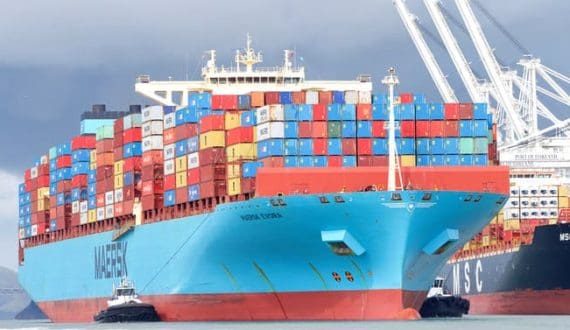
IFPA briefing highlights geopolitical risks for fresh produce supply chains
Diversifying shipping routes and suppliers reduces dependence on any single corridor.
AUSTRALIA – The International Fresh Produce Association Australia–New Zealand has led a discussion with crisis and geopolitical risk expert Duncan Hains, providing fresh produce businesses with guidance on preparing for ongoing geopolitical uncertainty.
With instability affecting global shipping routes, members expressed concerns about both short- and long-term impacts on their operations.
For food logistics professionals across the Middle East and Africa, the briefing offers actionable strategies for building supply chain resilience.
Key Risks: Maritime Logistics and Fuel Supplies
Mr. Hains outlined scenarios covering disruptions to fuel supply chains, maritime logistics, and access to raw materials for food security.
These risks are particularly acute for fresh produce exporters who rely on predictable shipping schedules and uninterrupted fuel supplies to maintain cold chain integrity.
Businesses were encouraged to focus on five key areas: supply chain resilience; collaboration through cross-sector working groups; behaviour and expectation management; reducing regulatory and administrative inefficiencies; and preparing for potential future conflicts with higher intensity, longer duration, and broader impacts.
Direct Statements on Crisis Planning
“Time lost in a crisis cannot be recovered,” Hains said. “It is better to plan in detail and adjust as needed than to wait for certainty that may never come.”
His comments highlighted a critical shift in mindset for food businesses. That is, companies must assume prolonged disruptions and build operational buffers accordingly.
Industry Response and Practical Insights
Managing Director Belinda Wilson said IFPA A-NZ will continue engagement with government, industry stakeholders, and global partners to keep members informed.
“This is a rapidly evolving situation with wide-reaching implications. Our role is to translate complex geopolitical developments into practical, actionable insights so our members can plan, prepare, and respond,” she said.
“Our industry has successfully navigated COVID-19, extreme weather events, and ongoing supply chain challenges. There is much that cannot be controlled, but our sector is defined by its ability to adapt.”
Outlook for Middle East and Africa Food Investors
For fresh produce stakeholders in the Middle East and Africa, the briefing reinforces several priorities. Diversifying shipping routes and suppliers reduces dependence on any single corridor.
In addition, cross-sector collaboration between importers, logistics providers, and government agencies improves information sharing and coordinated responses.
As Wilson noted, the sector’s defining strength is its ability to adapt. Therefore, proactive planning, not passive waiting, will separate resilient food businesses from those left vulnerable by the next disruption.
Sign up HERE to receive our email newsletters with the latest news and insights from Africa and around the world, and follow us on our WhatsApp channel for updates.