Ivorian coconut exports face 25% cost surge as ageing plantations, low rainfall shrink supply
For regional investors, Côte d’Ivoire’s supply gap signals both risk and opportunity.
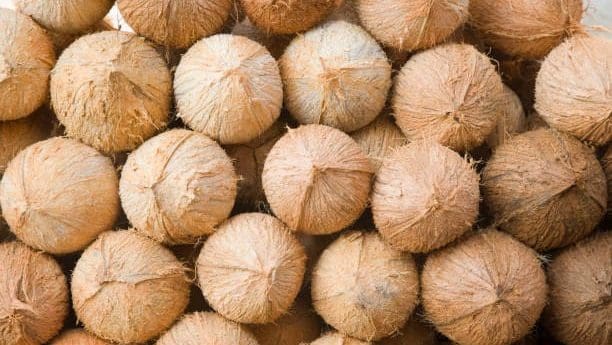
CÔTE D’IVOIRE – The Ivorian coconut industry is grappling with a significant supply shortage as ageing plantations and insufficient rainfall reduce production volumes, even as demand from European markets like the Netherlands and Italy continues to rise.
Nestor Beugre, CEO of Ivoire Agri, confirmed that demand consistently exceeds supply during peak periods. “Many European importers are interested in coconuts from Côte d’Ivoire. Demand is particularly strong in the Netherlands and Italy. Our customers are satisfied, and orders even exceed supply at certain times of the year, such as in the summer and at the end of the year,” he said.
However, he explained that production constraints are worsening. “The plantations are ageing and becoming less productive. We are also facing a problem of insufficient rainfall, which is reducing production volumes this year.”
For regional investors, Côte d’Ivoire’s supply gap signals both risk and opportunity. The 25% surge in export costs compared to last season reflects the intensity of demand pressure and supply constraints.
For instance, investors with capital for plantation rehabilitation, tree replacement, and irrigation improvements could capture significant market share from traditional supply contracts.
Additionally, processing facilities that convert Ivorian coconuts into value-added products such as coconut water, milk, and oil could help mitigate volatility in the raw fruit supply.
On the other hand, cross-border competition has compounded the crisis. Beugre noted that “many companies from Nigeria, Senegal, and Niger are buying coconuts here, which is leading to speculation and rising prices.”
In response, the Ivorian government introduced measures in February 2025 to curb “coconut spillage” to neighbouring buyers, extending regulations governing the Hevea and oil palm industries to the coconut sector. The aim is to increase availability for Ivorian exporters by restricting exports to nearby countries and prioritizing domestic supply chains.
These government regulations will reshape the regional coconut trade. By limiting cross-border flows, Côte d’Ivoire aims to stabilize local prices and ensure supply for its own exporters.
For Middle Eastern and African investors, the Ivorian coconut crisis highlights the value of plantation rehabilitation projects, irrigation infrastructure, and processing capacity that can capture value even when raw fruit supply is constrained.
As the Ivorian government enforces new export restrictions, the regional coconut market is entering a period of realignment that will reward those who invest in production capacity rather than rely on speculative cross-border trade.
Sign up HERE to receive our email newsletters with the latest news and insights from Africa and around the world, and follow us on our WhatsApp channel for updates.