
Ivory Coast’s cocoa mid-crop threatened by dry spell, low rainfall
Farmers are not panicking, at least not yet.
IVORY COAST – Below-average rainfall in the world’s top cocoa-growing regions is threatening the crucial mid-crop harvest, which runs from March to August. Persistent dry spells could shrink bean sizes, reduce quality, and cut overall output at a time when global cocoa prices are already elevated.
The rainy season normally runs from April to mid-November, yet many areas receive far less rain than the five-year average.
For instance, in Daloa, only 16.4 millimetres fell while in Soubre, just 10.9 millimetres. Farmers report that the critical window until late May will determine whether the mid-crop finishes strongly or collapses.
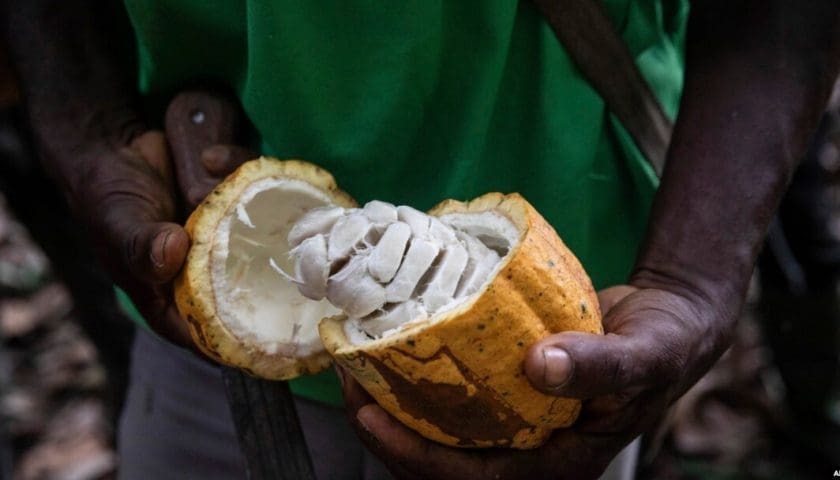
Albert N’Zue, a farmer near Daloa, warned of the consequences. “If there isn’t enough rain, the beans will be very small and of poor quality.” Others echoed his concern, noting that harvesting is intensifying, but pod development is lagging.
Ivory Coast produces roughly 40% of the global cocoa supply. Any shortfall in the mid-crop risks pushing already high world prices even higher, squeezing chocolate makers and consumers from Europe to Asia.
In addition, the 2025/26 season has already been marked by weather volatility, disease pressure, and ageing trees, making this dry spell particularly unwelcome.
For investors, climate-resilient cocoa farming presents emerging opportunities. Investment in drought-tolerant seedlings, irrigation systems, and farmer training programs could mitigate future supply shocks while generating returns.
Farmers are not panicking, at least not yet. This is because despite these challenges, some farmers have reported larger pods that could still deliver decent volumes in May and June if the rain returns.
However, for millions of smallholders who depend on cocoa for their livelihoods, the stakes are personal. A poor mid-crop means lower incomes at harvest time and tougher choices for school fees, healthcare, and food security.
On the other hand, global buyers are watching nervously. After years of supply squeezes, another weather-induced shortfall would keep the cocoa market on edge.
As a result, the coming weeks of rainfall will decide whether Ivory Coast’s mid-crop becomes a story of resilience or regret.
Lastly, the critical window until late May will determine the outcome for global cocoa prices, chocolate manufacturers, and farming communities across West Africa.
Sign up HERE to receive our email newsletters with the latest news and insights from Africa and around the world, and follow us on our WhatsApp channel for updates.