

Japan’s Organoid Farm completes 200-Litre cultivated beef trial ahead of 2028 plant launch
Company plans to open a commercial-scale production facility in 2028 as Japan develops food regulations
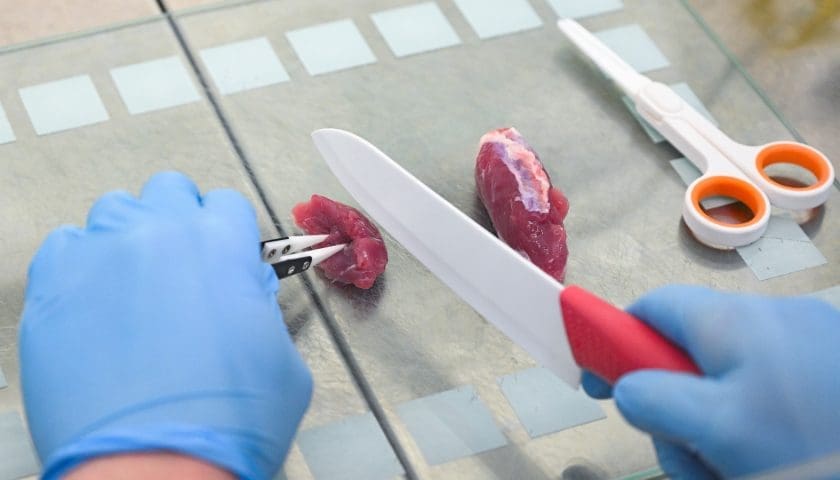
JAPAN – Japan-based biotechnology company Organoid Farm has completed a 200-litre demonstration run for cultivated beef production as the country moves closer to introducing regulations for cell-cultured foods.
The Fujisawa startup said the test covered the full manufacturing sequence, including the cultivation of bovine muscle cells and the collection of the final cultivated beef product, making it one of the larger cellular agriculture production trials reported in Japan.
In addition, the company stated that the trial generated operational data needed for future commercial manufacturing while also helping evaluate methods for scaling up production and reducing costs.
Suspension culture method tested
For the demonstration, researchers at JGC Holdings Corporation used a bioreactor designed for animal cell cultivation together with a bovine muscle cell line that the company described as difficult to grow under standard conditions.
The production process relied on a suspension culture system that avoided the use of scaffold materials such as gels or microcarriers, which are commonly added to help cells attach and multiply during cultivated meat production.
Organoid Farm said removing scaffold materials simplified the manufacturing setup by reducing raw material requirements and easing recovery procedures after cultivation.
The company added that the scaffold-free approach also improved agitation consistency inside the bioreactor while making cleaning and sterilisation procedures more manageable for large-scale operations.
Meanwhile, the cultivation stage was conducted between January and February 2026, and the company reported successfully recovering proliferated cells during the first production attempt.
Organoid Farm also said its proprietary bovine muscle cell line differs from conventional cells because it can continue multiplying without halting division midway through the process, which the company believes could support higher future output volumes.
New facility planned as Japan prepares regulations
At the same time, the company confirmed plans to establish a new production site scheduled to open in 2028, where it intends to scale manufacturing, develop additional cultivated food prototypes, and carry out demonstration projects linked to commercial applications.
The expansion plans come as Japanese government agencies and industry groups, including Japan Association for Cellular Agriculture, continue discussions on a regulatory approval framework for cultivated meat products.
Separately, Tokyo-based IntegriCulture has said it is preparing manufacturing trials ahead of a planned cultivated meat launch in spring 2027, while UK firm Hoxton Farms is also pursuing approval opportunities in Japan.
Meanwhile, Japanese food manufacturer Ajinomoto Co., Inc. recently developed a plant-derived alternative to transferrin, a cell culture ingredient linked to production costs in cultivated meat manufacturing, with plans to commercialise the product in the coming years.
Sign up HERE to receive our email newsletters with the latest news and insights from Africa and around the world, and follow us on our WhatsApp channel for updates.