
Kenya introduces drought-tolerant dragon fruit variety to boost food security, climate adaptation
Beyond its commercial value, dragon fruit offers health benefits that enhance its market appeal.
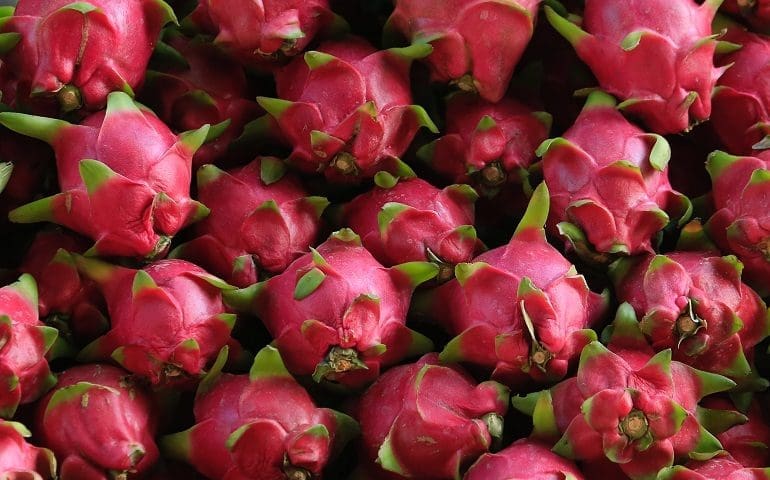
KENYA – Kenya has introduced a locally developed dragon fruit variety designed to combat food insecurity and adapt to worsening drought conditions, positioning the crop as a high-value alternative for farmers in arid and semi-arid regions.
The Kika1 variety, developed by Antony Kinoti at Gravity Farm in Kathuura, Meru County, was officially unveiled by the Kenya Plant Health Inspectorate Service, with Kephis chairman Joseph Eruaki presenting the Certificate of Grant of Plant Breeders’ Rights.
For Kenyan farmers, dragon fruit offers a compelling value proposition. The plant thrives in tropical temperatures between 21 and 30 degrees Celsius with annual rainfall of 500 to 1,500 millimeters, making it well-suited to the country’s drylands.
In Vietnam, the world’s largest dragon fruit producer, the crop generates approximately US$1 billion (KSh129 billion) in exports annually.
Stakeholders in Kenya note that parts of the country have climatic conditions comparable to Vietnam, supporting the case for local adoption.
Beyond its commercial value, dragon fruit offers health benefits that enhance its market appeal. The fruit is recommended for patients with diabetes and high blood pressure due to its properties, positioning it as both a functional food and a speciality crop.
This dual positioning, both nutritious and commercially viable, makes it an attractive option for food industry investors seeking products aligned with global wellness trends.
Eruaki encouraged farmers to begin small-scale cultivation. “I am urging farmers in Kenya that even if you don’t have a large farm, you can start with a quarter acre and plant 20 to 50 trees, or 100 if you can, and gradually increase. They are in the family of desert plants that grow in arid and semi-arid areas, so the water demand is very little,” he said.
Kinoti, who will act as the sole propagator and distributor of the Kika1 variety, emphasized the crop’s potential for both food security and commercial development, adding that it is time for Kenyan growers to recognize the opportunities in production.
In addition, the initiative represents a strategic shift toward sustainable agriculture that leverages Kenya’s unique environmental conditions. As climate change intensifies drought frequency across East Africa, drought-tolerant cash crops like dragon fruit provide a model for agricultural adaptation that balances economic growth with resource constraints.
For investors, the Kika1 variety’s official recognition provides a structured entry point into a promising yet capable subsector.
Sign up HERE to receive our email newsletters with the latest news and insights from Africa and around the world, and follow us on our WhatsApp channel for updates.