

KRA defends US$24,725 minimum yield as risk tool, not tax, as new cargo rules take effect
KRA said it is mandated to implement and administer laws enacted by Parliament while facilitating legitimate trade and business operations.
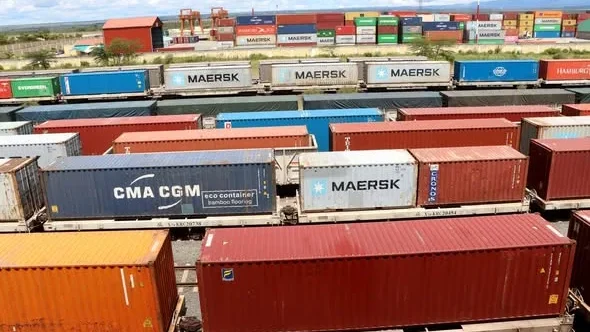
KENYA – The Kenya Revenue Authority (KRA) has clarified that the Sh3.2 million (approx.US$24,725.7) minimum yield for consolidated cargo is a risk-management reference, not a tax, to address trader concerns over import documentation rules effective September 1, 2026.
The requirement for an export declaration to clear imported goods is anchored in Section 23B of the Tax Procedures Act, introduced through the Finance Act 2026.
Under the law, importers must obtain and retain a valid export declaration, export entry, customs export certificate, or equivalent documentation from the country of origin, and retain it for at least five years.
KRA said it is mandated to implement and administer laws enacted by Parliament while facilitating legitimate trade and business operations.
Minimum yield clarification and stakeholder concerns
The revised Sh3.2 million minimum yield, effective August 21, 2026, prompted planned demonstrations and a nationwide business shutdown on August 28 over rising import costs. KRA explained that the minimum yield simplifies the clearance of consolidated cargo for small-scale traders who pool shipments to access more affordable logistics.
“Where an import declaration is supported by proper commercial documentation, Customs assesses goods based on the declared transaction value, subject to applicable legal and risk-management requirements,” KRA stated.
Traders who do not wish to use the simplified arrangement can opt out and request Customs to verify their containers, or de-consolidate cargo into individual consignments for separate declarations.
Vehicle valuation and legal proceedings
On motor vehicle valuation, KRA declined to comment, citing the principle of sub judice as the matter is currently before the court. Clearing agents have faulted KRA over new rules requiring an Export Declaration for vehicle importation, arguing that every vehicle comes with an export certificate, which they say should be sufficient.
Agents reported that no vehicles had been released from the Mombasa port or Container Freight Stations since the previous week because of the new requirement, which they say increases costs and causes severe delays.
Meanwhile, the broader reforms at the Port of Mombasa, which handles 2.1 million TEUs annually, include plans to pilot Smart Gates, harmonize staff shifts for 24/7 operations, and integrate customs and government agency systems to automate cargo movement.
Finally, the authority remains committed to supporting small-scale traders and legitimate businesses while taking measures to prevent abuse of customs procedures.
Sign up HERE to receive our email newsletters with the latest news and insights from Africa and around the world, and follow us on our WhatsApp channel for updates.