

Meat prices soar in Rwanda as vendors struggle to keep up with costs
Consumers feel the pinch as beef, poultry, and fish prices surge; inflation data shows steep rise in meat category
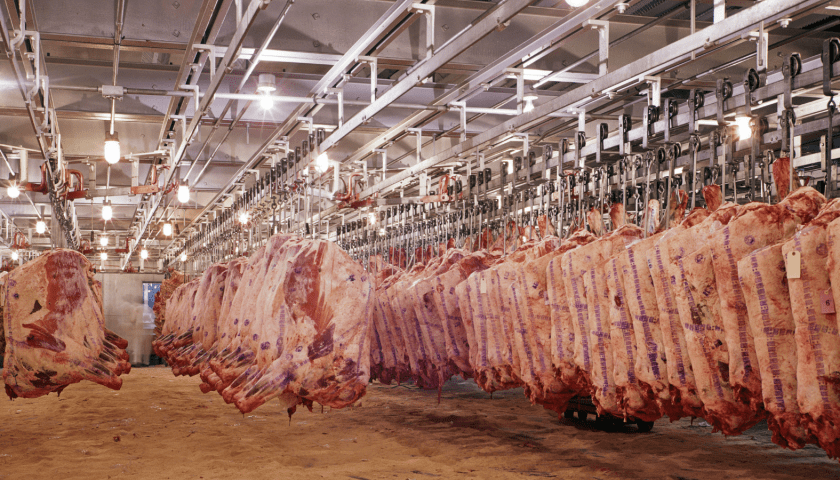
RWANDA – Meat prices in Rwanda are rising sharply, affecting both shoppers and vendors, who say they are struggling with increasing operational expenses.
From beef to poultry and fish, sellers at local markets are witnessing daily price fluctuations, largely due to high fuel costs, feed shortages, and reduced supply.
At Nyarugenge Market in Kigali, meat vendors claim that demand and seasonality are also influencing prices.
Reports claim that bony beef now sells for around US$4.90 (Rwf6,000), up by roughly US$0.40 (Rwf500) from last year, while boneless cuts are fetching US$6.50 (Rwf8,000).
Stomach meat, once priced at US$2.00 (Rwf2,500), is now selling for US$2.45 (Rwf3,000), he adds.
Poultry prices have been unpredictable, with exotic chicken averaging about US$2.85 (Rwf3,500) per kilo.
Meanwhile, local chicken, which was priced at around US$4.10 to US$4.50 (Rwf5,000 to Rwf5,500) in 2024, has jumped to US$5.30 (Rwf6,500) this year.
The prices of goat and sheep meat have increased to US$6.10 (Rwf7,500) per kilo from US$4.90 (Rwf6,000), while tilapia is now trading between US$4.50 and US$5.00 (Rwf5,500–Rwf6,000) depending on availability.
Fish fillet has risen to US$9.40 (Rwf11,500), driven by declining supply.
Farmers point to the rising cost of animal feed as a key reason behind the spike in poultry prices.
Beef, on the other hand, continues to see strong consumer demand, partly due to expanding supply channels.
Musabyimana says he now sells 50 to 60 kilograms of beef per day, a drop from last year’s daily average of 100 to 150 kilograms, while chicken sales hover around 10 kilograms.
Inflation Data Highlights Sharp Rise in Food Costs
Rwanda’s Consumer Price Index (CPI) for April 2025 shows a continued rise in inflation, largely influenced by higher food prices.
According to the National Institute of Statistics of Rwanda (NISR), the country’s inflation rate reached 6.3% in April, up from March.
Urban inflation matched the national average at 6.3%, while rural areas saw a slightly higher rate of 6.9%.
Food and non-alcoholic beverages, which account for 27% of the CPI, were the main contributors to the inflation spike.
Urban food prices in this category climbed 7.9% year-on-year and 2.7% month-on-month.
The price of meat rose sharply, increasing by 33.8% in urban areas and 35.5% in rural regions compared to April 2024.
Vegetable prices also jumped, with urban rates up by 8.5% and rural areas seeing a 6.6% rise.
The index for fresh produce, including seasonal fruits and vegetables, surged by 14.6% over the past year.
Energy prices, however, edged down slightly by 0.7% on an annual basis.
Restaurant and hotel prices went up by 14.7%, but their overall influence was smaller due to their 9% CPI weight.
Housing, water, electricity, and fuel costs, which carry a 21% weight, rose by 3.3%, while transport saw a 3.8% increase.
On a month-to-month basis, the overall CPI rose by 2.3%, marking a noticeable uptick from March.
Core inflation, excluding volatile items like fresh food and energy, rose by 4.4% over the year, suggesting broader pricing pressure.
Sign up HERE to receive our email newsletters with the latest news and insights from Africa and around the world, and follow us on our WhatsApp channel for updates.

