

MIDROC Ethiopia expands tea investment with major cultivation and processing projects
The expansion includes partnerships with farmers, new factories, and a 30,000-hectare government-backed tea cultivation initiative.
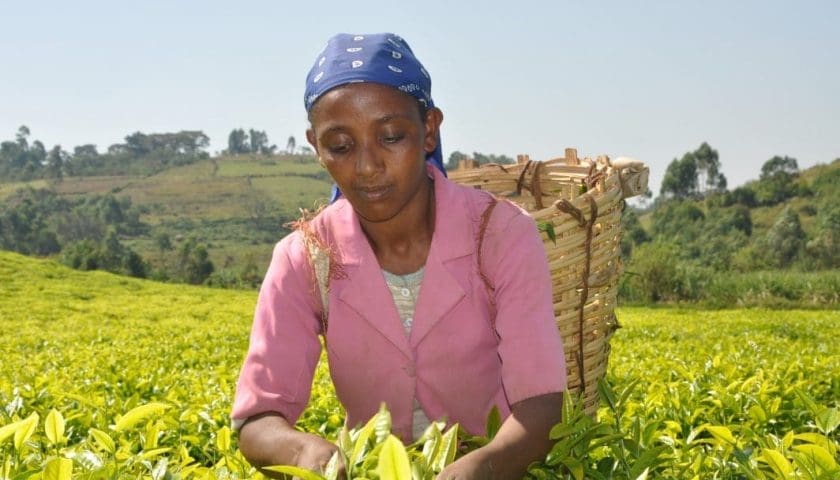
ETHIOPIA – MIDROC Ethiopia Group has announced a significant expansion of its tea sector investment in Ethiopia, aiming to elevate the country’s position in the global tea market.
CEO Jamal Ahmed unveiled the initiative during the second phase of the fifth round of the 19th About Ethiopia Forum.
The expansion involves a collaboration with 1,000 farmers working on 4,000 hectares of land in the Jimma and Ilubabor zones to produce premium-grade tea, with 20 percent of output already reaching international markets.
The Oromia state government is supporting the project by allocating an additional 30,000 hectares for tea cultivation.
To enhance both quantity and quality, MIDROC will provide participating farmers with technical assistance, professional guidance, and access to high-yield seedlings.
The company also plans to construct seven large-scale tea processing factories within a 20-kilometer radius of the cultivation zones. These factories are expected to boost processing capacity, improve product quality, and support export growth.
Jamal emphasized that the initiative will contribute significantly to employment generation. As the project expands, at least 40,000 new producers could be integrated into the supply chain.
He also underscored the importance of capacity-building, calling for training programs that offer skills development and promote long-term productivity among the youth.
Currently, MIDROC Ethiopia has created employment for over 74,000 people, many of whom previously had limited access to government services.
The CEO called on other private sector actors to follow suit by investing in value-added and productive sectors that can drive inclusive economic growth.
He also highlighted the need for stronger collaboration between educational institutions, the Ministry of Labor and Skills, and the private sector.
Such partnerships, he said, are critical to equipping young people with entrepreneurial skills and ensuring sustainable job creation.
In the 2023/24 fiscal year, Ethiopia exported more than 1,142 tons of tea, generating over US$2 million.
Historically, tea cultivation was limited to 5,000 hectares with annual foreign exchange earnings rarely exceeding US$3 million. However, recent efforts have scaled up production, including the planting of 460 million saplings across 30,000 hectares.
The new tea initiative reflects Ethiopia’s broader agricultural transformation strategy and the increasing role of private sector investment in national development.
Sign up HERE to receive our email newsletters with the latest news and insights from Africa and around the world, and follow us on our WhatsApp channel for updates.