Namibia’s livestock sector to focus on herd rebuilding as marketing slows
Farmers are holding back animals to rebuild herds after years of drought
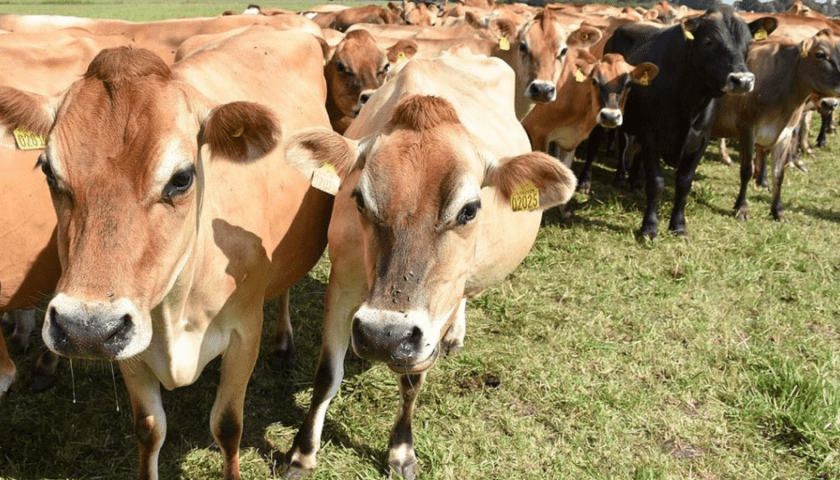
NAMIBIA – Namibia’s livestock sector is shifting from selling to herd restoration in the first half of 2025, with fewer animals reaching markets after extended droughts forced reductions in previous years, according to the Namibian Agricultural Union’s latest Agri-Review.
Cattle marketing is declining by 56 percent to 92,600 head compared to 211,610 during the same period in 2024, while sheep numbers are falling by 41 percent to 306,233 head.
Goat sales are showing more resilience, though exports to South Africa are dropping by 10 percent to 53,134 head.
The slowdown in sales is being linked to farmers retaining around 60 percent of auctioned animals for herd rebuilding, a sharp rise from the usual 2 to 5 percent.
At the same time, livestock production costs are easing by 2 percent in the twelve months to June 2025, largely due to a 10 percent cut in fuel prices.
Electricity expenses are climbing by 3 percent in the second quarter, but this is being offset by lower maintenance and capital expenditure costs, which are falling by 3 and 5 percent respectively.
Improved profitability is emerging this year as prices strengthen across livestock categories after two years of drought-related financial strain.
A2 cattle prices are moving from US$3.00 (N$59.25) per kilogram in the first half of 2024 to US$3.30 (N$65.15) in 2025, while B2 cattle prices are climbing from US$2.95 (N$58.18) to US$3.30 (N$65.09).
C2 cattle are recording the steepest rise of 12 percent, shifting from US$2.87 (N$56.77) to US$3.23 (N$63.78).
Small livestock is seeing even sharper gains, with A2 lamb prices jumping 23 percent to US$4.65 (N$92.00) per kilogram and C2 sheep prices increasing 27 percent to US$3.10 (N$61.27).
Weaner calves are trading at US$1.66 (N$32.81) per kilogram, up from US$1.37 (N$27.03) a year earlier.
Despite these price increases, beef exports are falling by half to 5,461 tonnes in the first half of 2025 compared to 10,968 tonnes in 2024.
Sales to South Africa, the United Kingdom and China are dropping as fewer animals are slaughtered at export abattoirs.
Sheep exports are also contracting, with volumes decreasing to 155 tonnes from 405 tonnes the previous year, mainly destined for Botswana, South Africa and Norway.
Goat prices, however, are hitting record levels, averaging US$73.40 (N$1,408) per head compared to US$53.90 (N$1,035) in 2024.
Globally, beef prices are continuing to climb as herd sizes shrink and feed costs rise, with EU, US, Australian and South African markets all recording higher rates.
Looking ahead, the review points to herd rebuilding as a necessary cycle after years of drought-related selling, though challenges such as bush encroachment and heavy reliance on live exports remain.
The report adds that improved rangeland management could help double output and shorten the time it takes for animals to reach market weight.
Sign up HERE to receive our email newsletters with the latest news and insights from Africa and around the world, and follow us on our WhatsApp channel for updates.