Nigeria, FAO alliance targets climate-smart agriculture, irrigation expansion
As for integrating modern technologies, digital platforms play a critical role in this transformation.

NIGERIA – Nigeria has reaffirmed its commitment to strengthening its partnership with the Food and Agriculture Organization (FAO) as part of efforts to accelerate climate-smart agriculture and enhance national food security.
The collaboration focuses on expanding irrigation infrastructure, improving pest management, and integrating modern technologies to enable year-round farming.
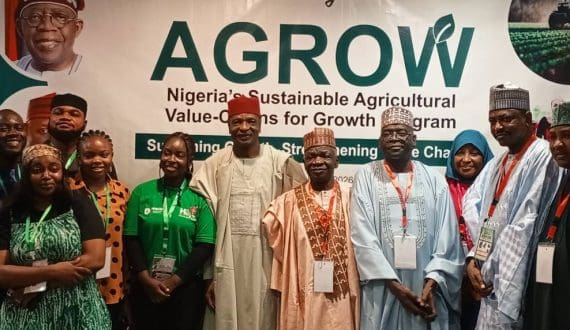
Minister of State for Agriculture and Food Security, Aliyu Sabi Abdullahi, said after a strategic meeting with an FAO delegation in Abuja that the collaboration would boost agricultural productivity through climate-resilient practices, improved access to quality seeds, the adoption of modern technologies, and stronger value chains.
In addition, he called for greater support to expand and modernize irrigation infrastructure, stressing that efficient irrigation remains critical to achieving year-round farming and increased food production.
The minister also identified plant health and pest management as urgent priorities, emphasizing that effective control measures would significantly improve crop yields.
On the other hand, Minister of Agriculture and Food Security, Abubakar Kyari, emphasized the role of strategic market systems in transforming Nigeria’s agricultural sector. He explained that well-structured markets would shift farming from subsistence to profitable, competitive value chains, directly increasing farmers’ incomes and strengthening economic resilience.
Kyari added that improved market systems would attract private-sector investment, reduce reliance on aid, and create self-sustaining agricultural ecosystems.
As for integrating modern technologies, digital platforms play a critical role in this transformation. Kyari noted that digital platforms and improved market information would empower farmers to secure better prices and reduce exploitation by intermediaries.
He cited agribusiness platforms such as Extension Africa, Pullus Africa, Nimsy Agro, Vet Konnect, and Thrive Agric as examples of how targeted support can scale innovation and improve farmers’ access to critical services.
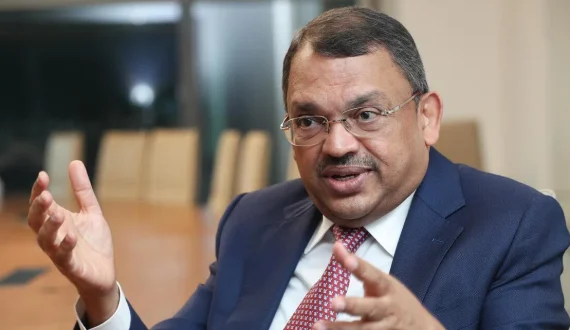
FAO Country Representative Hussein Gadain reaffirmed Nigeria’s vast agricultural potential, noting that sustained collaboration and strategic interventions would be key to unlocking growth. He outlined priority areas for joint action, including strengthening market systems, promoting climate-smart agriculture, and improving national agricultural data management.
The renewed engagement highlights a coordinated effort by the Federal Government and FAO to build a resilient, inclusive, and productivity-driven agricultural sector capable of meeting the country’s growing food demand.
For regional stakeholders, Nigeria’s FAO alliance demonstrates how public-private development partnerships can de-risk agricultural investment while advancing climate adaptation and food security goals.
Sign up HERE to receive our email newsletters with the latest news and insights from Africa and around the world, and follow us on our WhatsApp channel for updates.