
Novo Nordisk, Gates Foundation fund US$25.5M push for CO₂-to-food innovation
By directly feeding fermenting microorganisms with acetate, the process eliminates the need for sugar while maintaining high protein yields.
DENMARK – A pioneering international consortium, Acetate Consortium, is entering a new phase in its mission to transform carbon dioxide into nutrient-rich food, following a fresh funding boost from the Novo Nordisk Foundation and the Bill & Melinda Gates Foundation.
The initiative has been granted up to DKK 162.2 million (approximately US$25.5 million) in new funding to scale its breakthrough research.
Over the next two years, the group will move from laboratory advances to developing and testing actual food prototypes, a milestone viewed as critical in the effort to build climate-resilient food systems.
Launched in 2023, the consortium brings together research institutions, commercial enterprises, and culinary innovators to explore how CO₂-derived acetate can replace sugar in fermentation processes.
This enables the production of single-cell and precision proteins without relying on farmland or freshwater resources, a potential game-changer for global food security.
“The consortium shows what we can achieve with bio-solutions when researchers and companies join forces,” said Claus Felby, vice president of Agri-Food at the Novo Nordisk Foundation. “Within the next two years, we can expect to see actual food prototypes tested by consumers.”
The broader ambition is to decouple food production from conventional agriculture, thereby reducing dependency on scarce land and water resources.
By directly feeding fermenting microorganisms with acetate, the process eliminates the need for sugar while maintaining high protein yields.
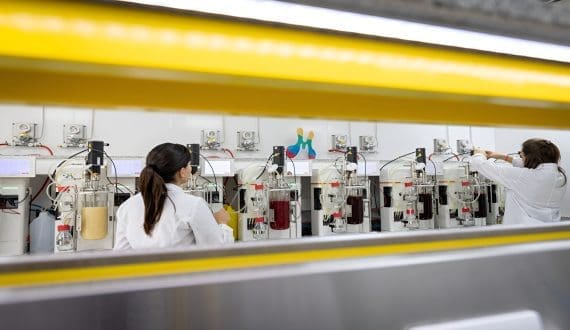
In its first phase, the consortium delivered promising outcomes. Researchers developed microbial strains capable of thriving on 100% acetate with protein content exceeding 40%.
Pilot acetate production facilities were also established at Aarhus University, and key cost drivers, particularly electricity and infrastructure, were identified for future scale-up.
The second phase will focus on optimising the technology, modelling its environmental and economic impact, and expanding the network of partners.
New collaborators are joining to add expertise in food science, consumer behaviour, gastronomy, and socio-economic modelling, ensuring that prototypes are not only technically viable but also palatable and market-ready.
Denmark’s reputation for food innovation plays a central role in the project’s evolution. The addition of Spora, led by chef Rasmus Munk of Copenhagen’s two-Michelin-starred restaurant Alchemist, introduces culinary creativity into the scientific mix.
“One of Denmark’s strengths is the ability to bridge research, industry, and gastronomy,” Felby noted. “This makes us an ideal test country for technologies where CO₂ becomes a raw material for the food of the future.”
Consortium partners for 2025–2027 include Topsoe, Novonesis, Orkla Denmark, Spora, CORC, Aarhus University, the University of Copenhagen, Northwestern University, and the Copenhagen Process.
By converting harmful emissions into edible resources, the Acetate Consortium exemplifies a bold convergence of climate solutions and food innovation.
If successful, its work could help reimagine food production in regions where agriculture is limited, offering new hope for tackling both climate change and food insecurity.
Sign up HERE to receive our email newsletters with the latest news and insights from Africa and around the world, and follow us on our WhatsApp channel for updates.